Inspiration through material
Caroline Zimbalist © Aleko Syntelis
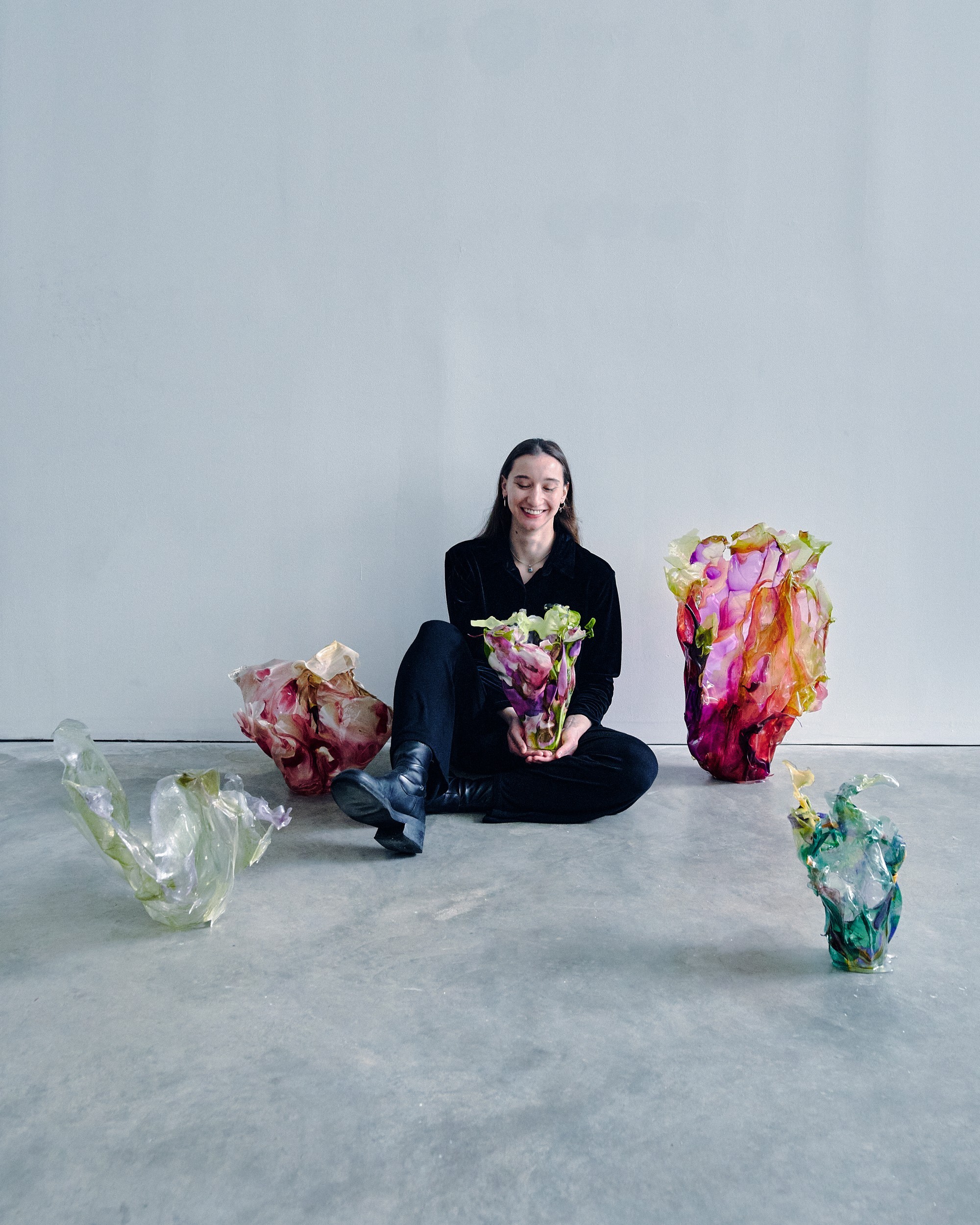
Caroline Zimbalist’s works are somewhat unusual in the creative sphere. Neither quite sculptures nor truly clothing, they transcend disciplinary boundaries.
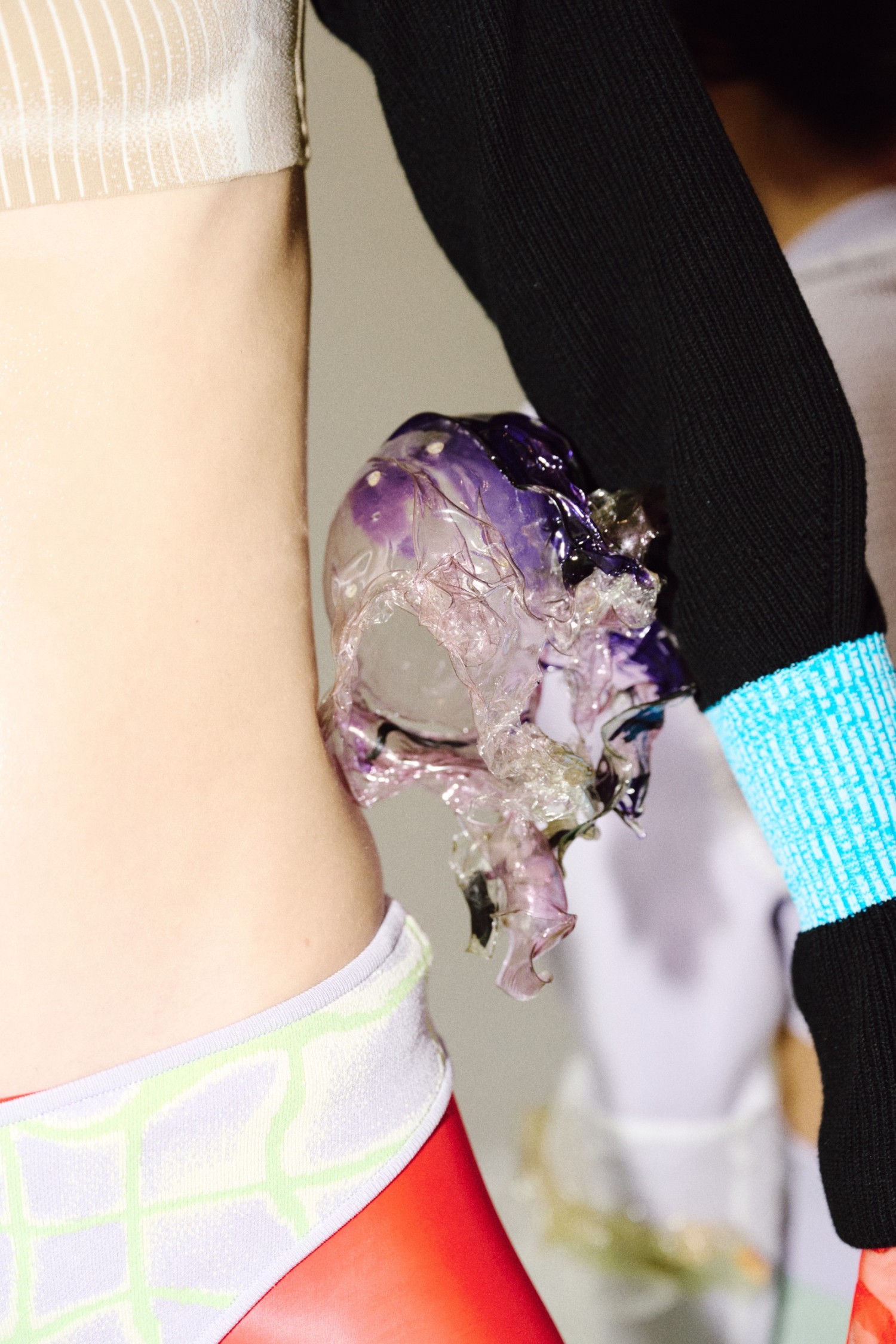
‘I’ve always wanted to combine the worlds of fine art and fashion. For me, they are not separate. Both convey emotions, memories and worlds without the need for words’, she says. And it’s true, when you look at her collections of wearable sculptures, a whole imaginary world is revealed. It’s a world of her own: vegetal, organic and vibrant, which some might liken to the free-spirited universe of designer Gaetano Pesce. ‘It’s a real compliment and, above all, a funny story’, she says. The young designer began her career working with the Italian master. ‘The way each piece was created, with spontaneity, energy and an openness to the unexpected, made a big impression on me’, she continues.
Like Gaetano Pesce, Caroline Zimbalist is not afraid to experiment and take risks. She quickly turned her attention to the material. Indeed, on closer inspection, the fabric she uses is unlike any traditional fabric. ‘During my studies in textile design, I worked a lot with ‘toxic’ materials such as silicone and rubber. I became seriously ill as a result of this exposure’, she explains. This shock became a turning point. Why continue working with conventional materials that limited her creativity and went against her convictions?
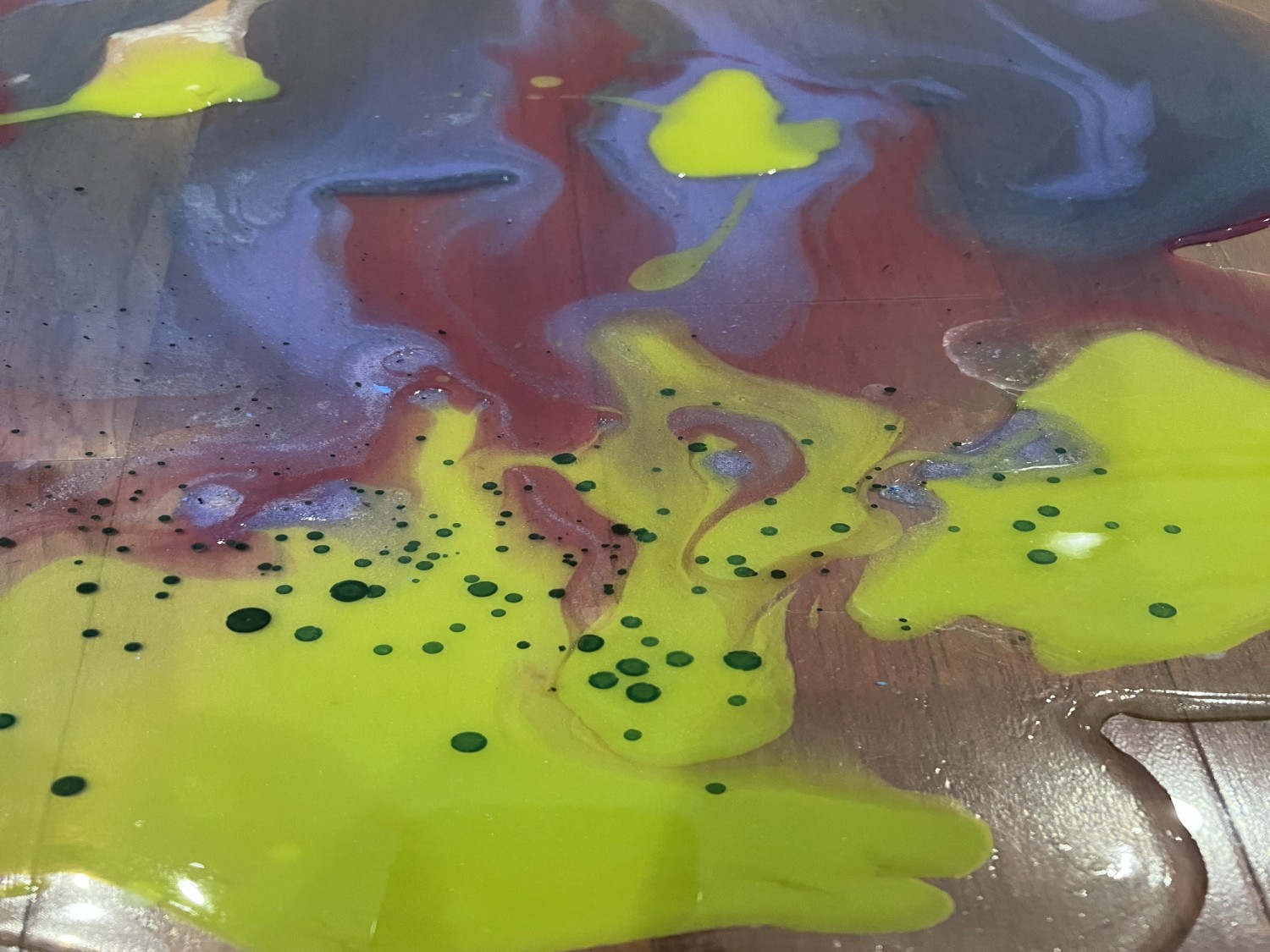
She then sought an alternative: a healthy, expressive, customisable material that could accommodate her universe. She began experimenting in her kitchen. She tested combinations, refined formulas, and observed how heat, humidity, and thickness changed the behaviour of the mixture. She let herself be guided by mistakes and intuition.
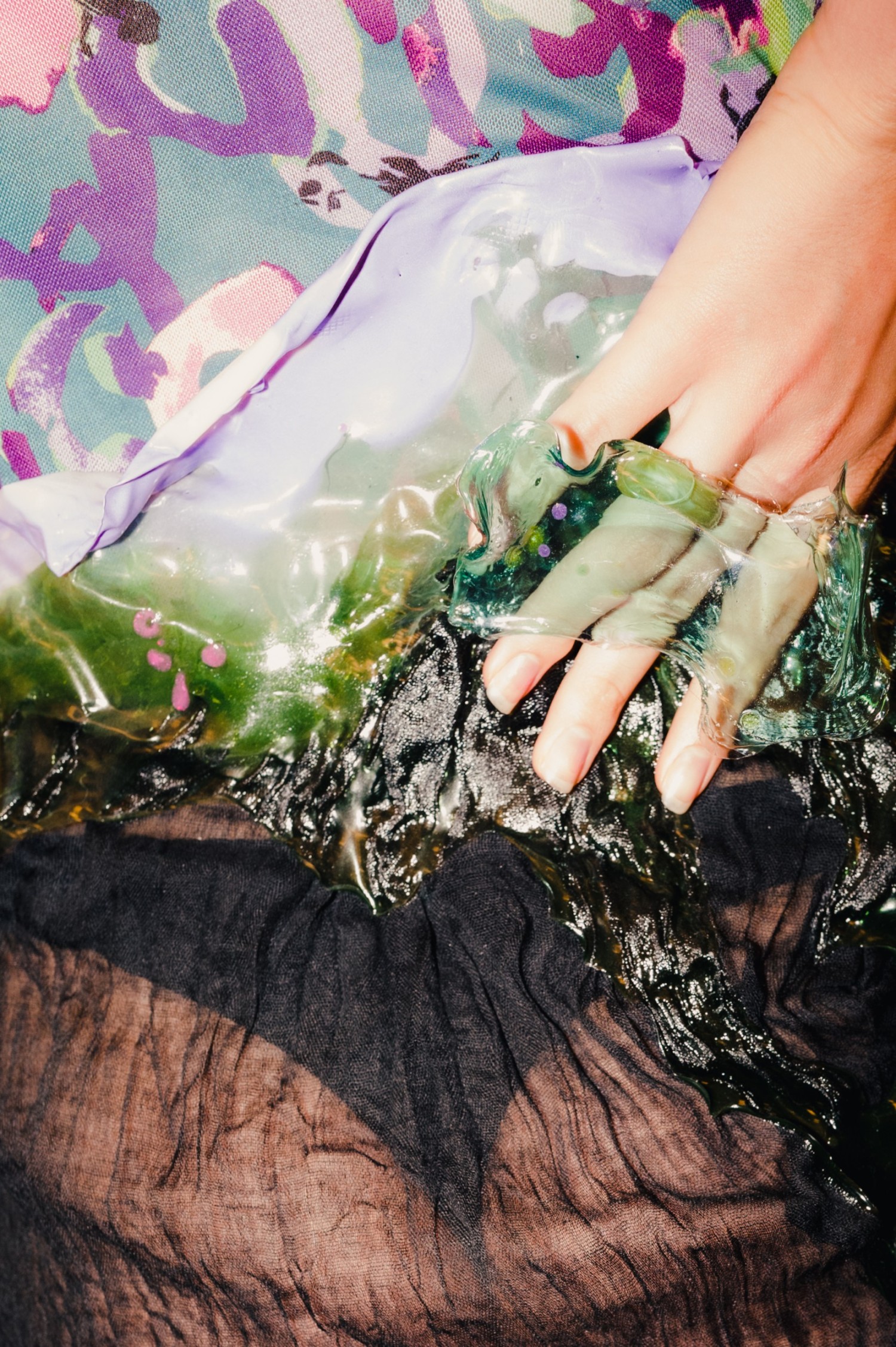
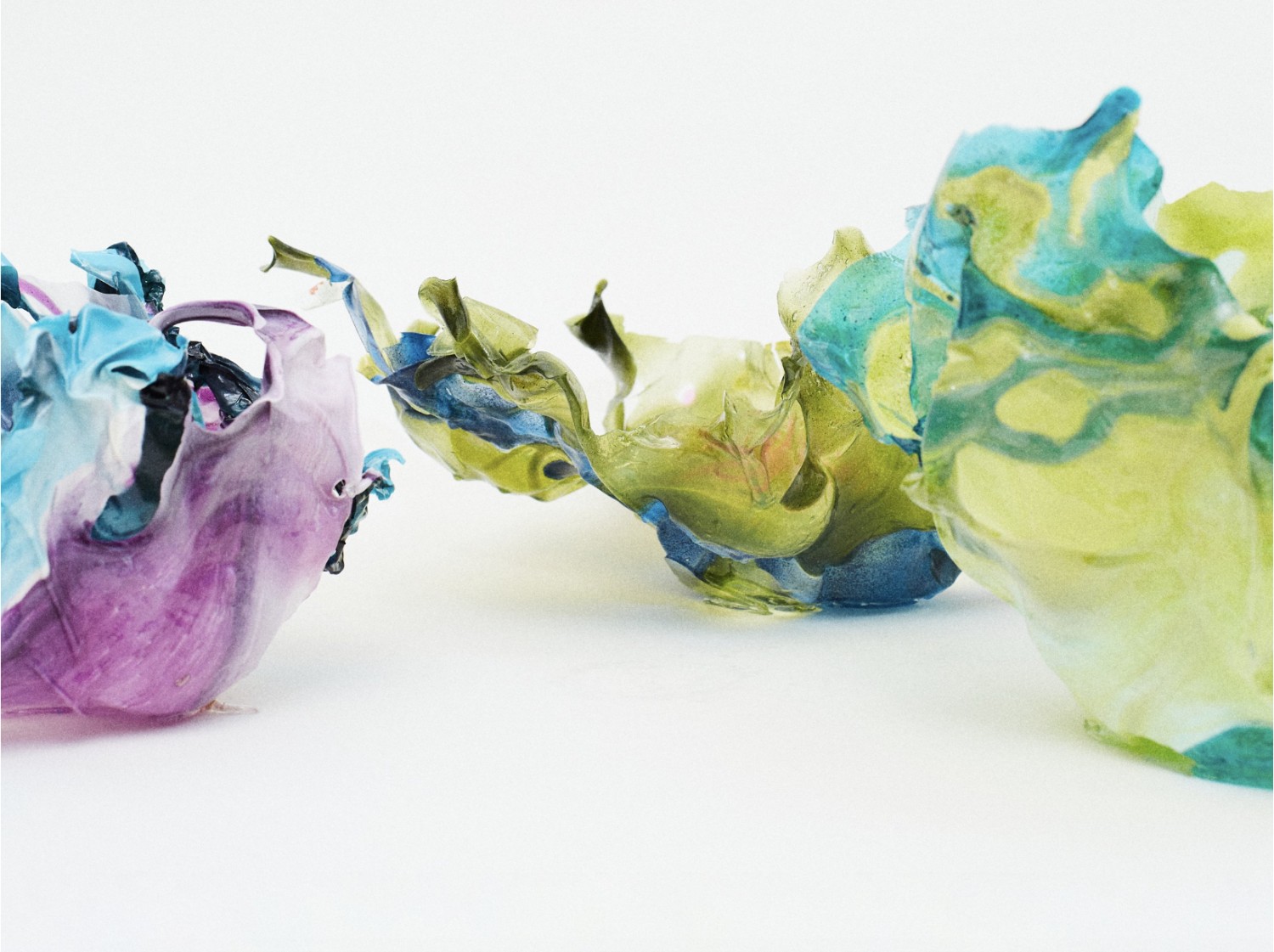
After several years, she developed her own recipe and created a biodegradable bioplastic that met her expectations. ‘With this material, I can work on the texture, opacity, structure and finish’, explains Caroline Zimbalist. Its great flexibility allows her to sculpt organic, almost futuristic shapes, which she transposes onto clothing, jewellery and decorative objects. It offers a range of creative possibilities that she could not find in most traditional materials.
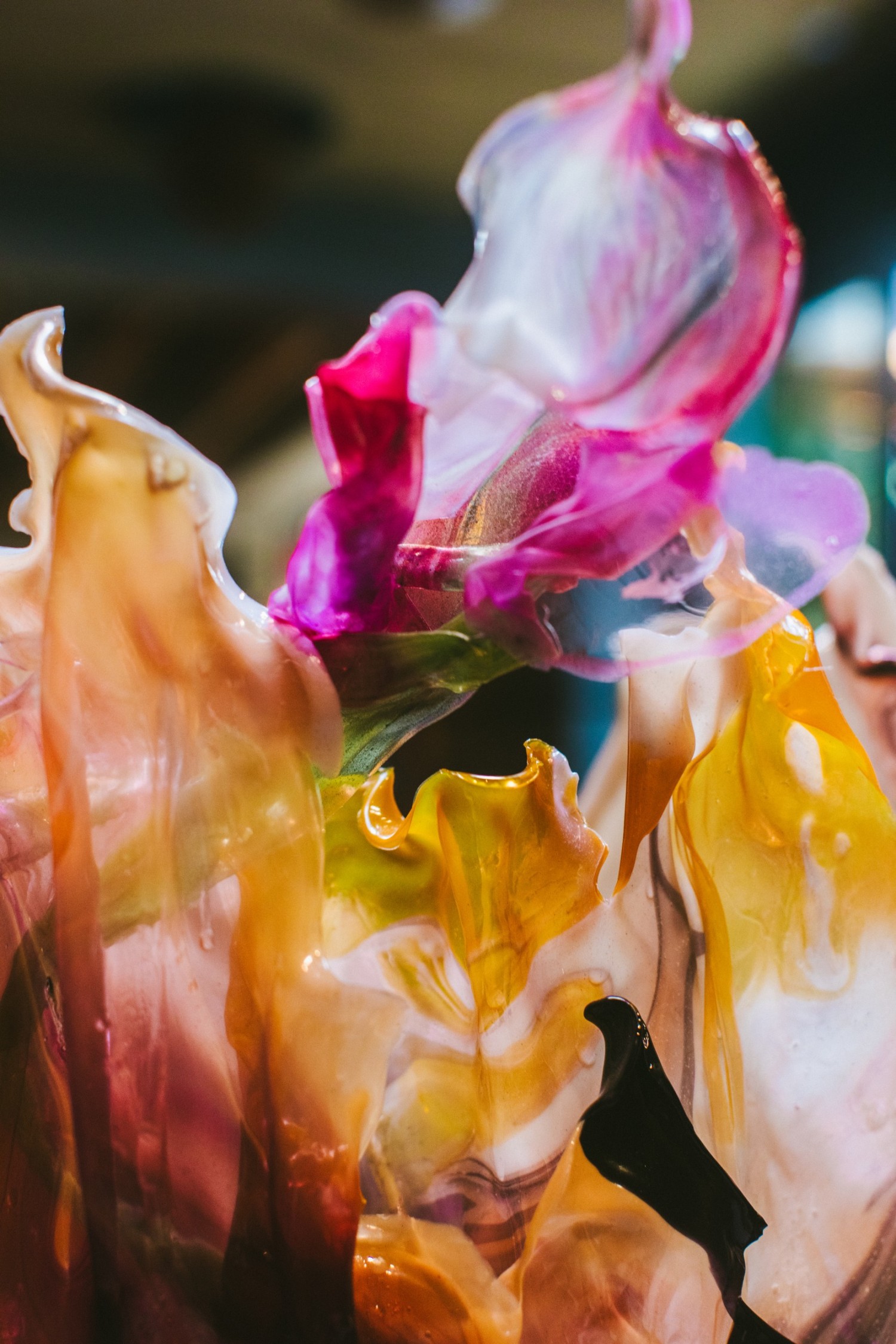
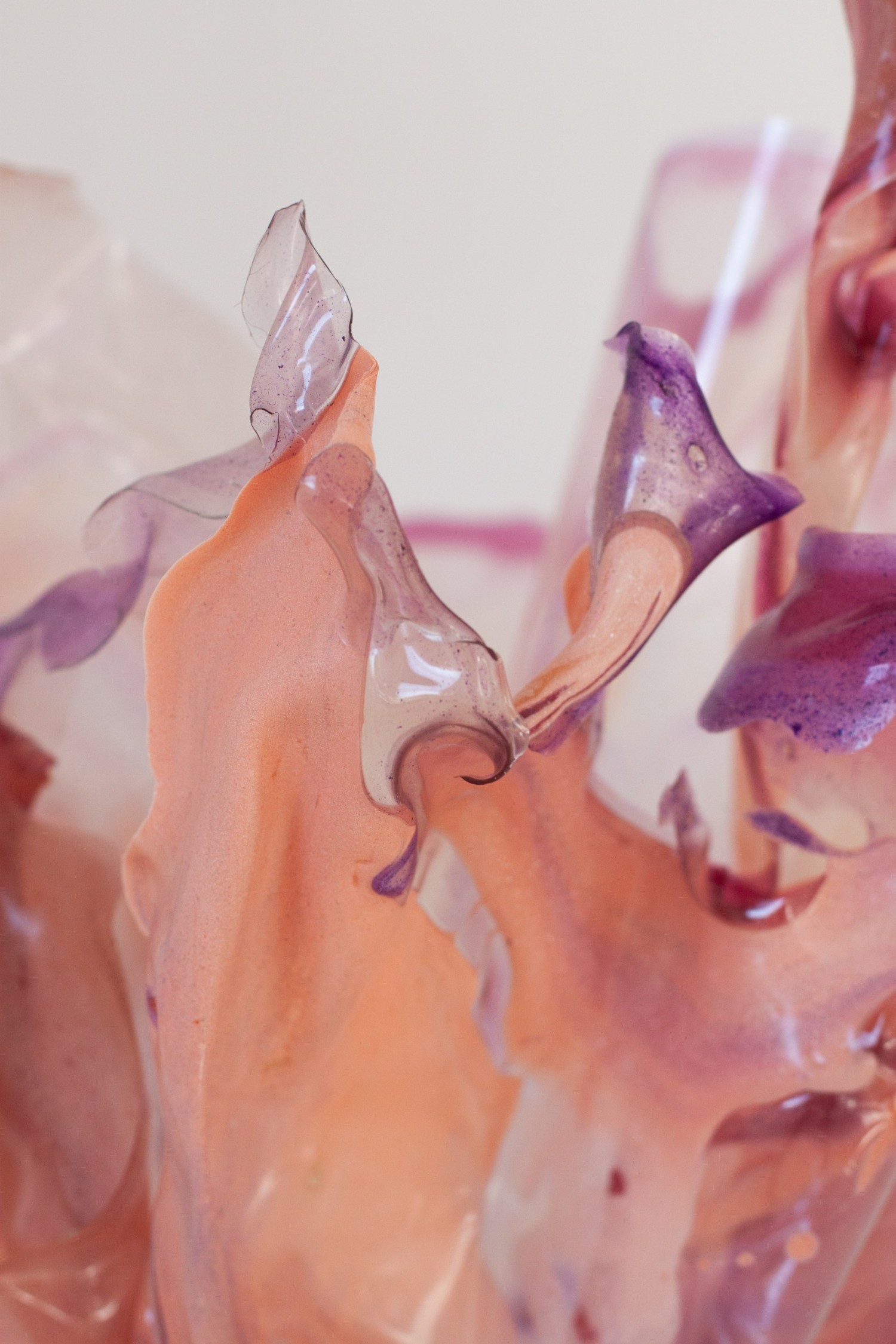
Each piece is the result of a genuine relationship with the material, which is never quite the same. It is reminiscent of her fascination with nature, whose evolution she loves to observe over time. ‘The changing silhouettes, patterns and scales of natural forms influence the organic lines and colours of my work’, says the designer. The colours, made from fruit, plant or animal pigments, give the material an extra dimension. Bright and bold, they overlap with the transparency of the biomaterial, revealing the same subtleties as skin.
Today, Caroline Zimbalist is expanding her universe beyond the wearable art that made her famous. She is collaborating with the Museum of Arts and Design in New York, designing a series of matching tableware and accessories, and recently new ideas have emerged. ‘I’d like to see how this bioplastic can be transformed into a sculptural lamp or luminous object. How light can interact with its textures and transparency’, she concludes. Her material is only just beginning to reveal its potential. And with this curiosity for experimentation, the designer shows no signs of stopping. •
photos : photos : Detail © Caroline Zimbalist • Ring © Caroline Zimbalist • Vessel © Caroline Zimbalist • © Carolyne Loree Teston • Vessels, Caroline Zimbalist • Elena Velez NYFW SPRING 2023 YR002: IN GLASS COLLABORATION, Caroline Zimbalist © Carolyne Loree Teston • Apricot Shell Vessel © Caroline Zimbalist