Inspiration through material
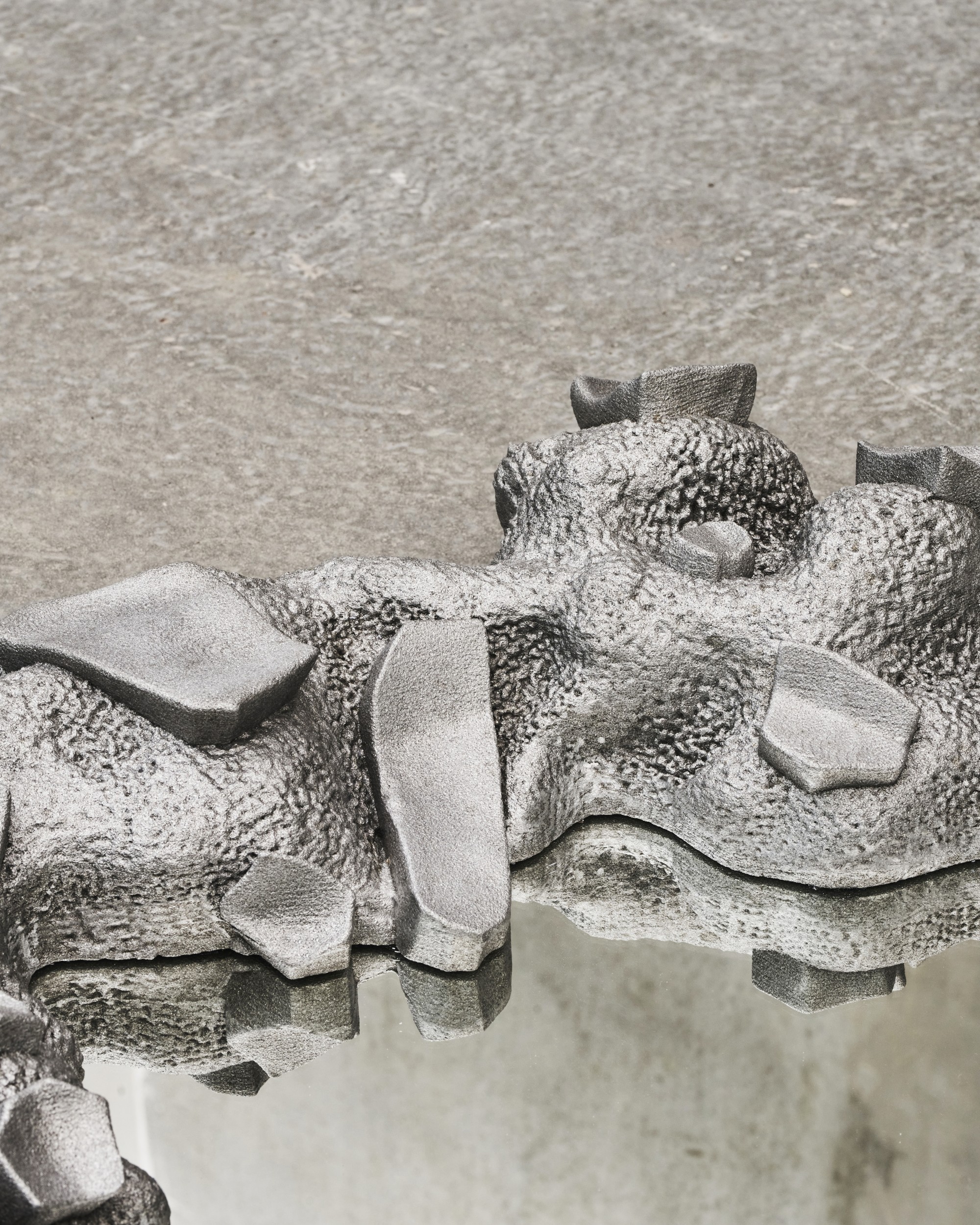
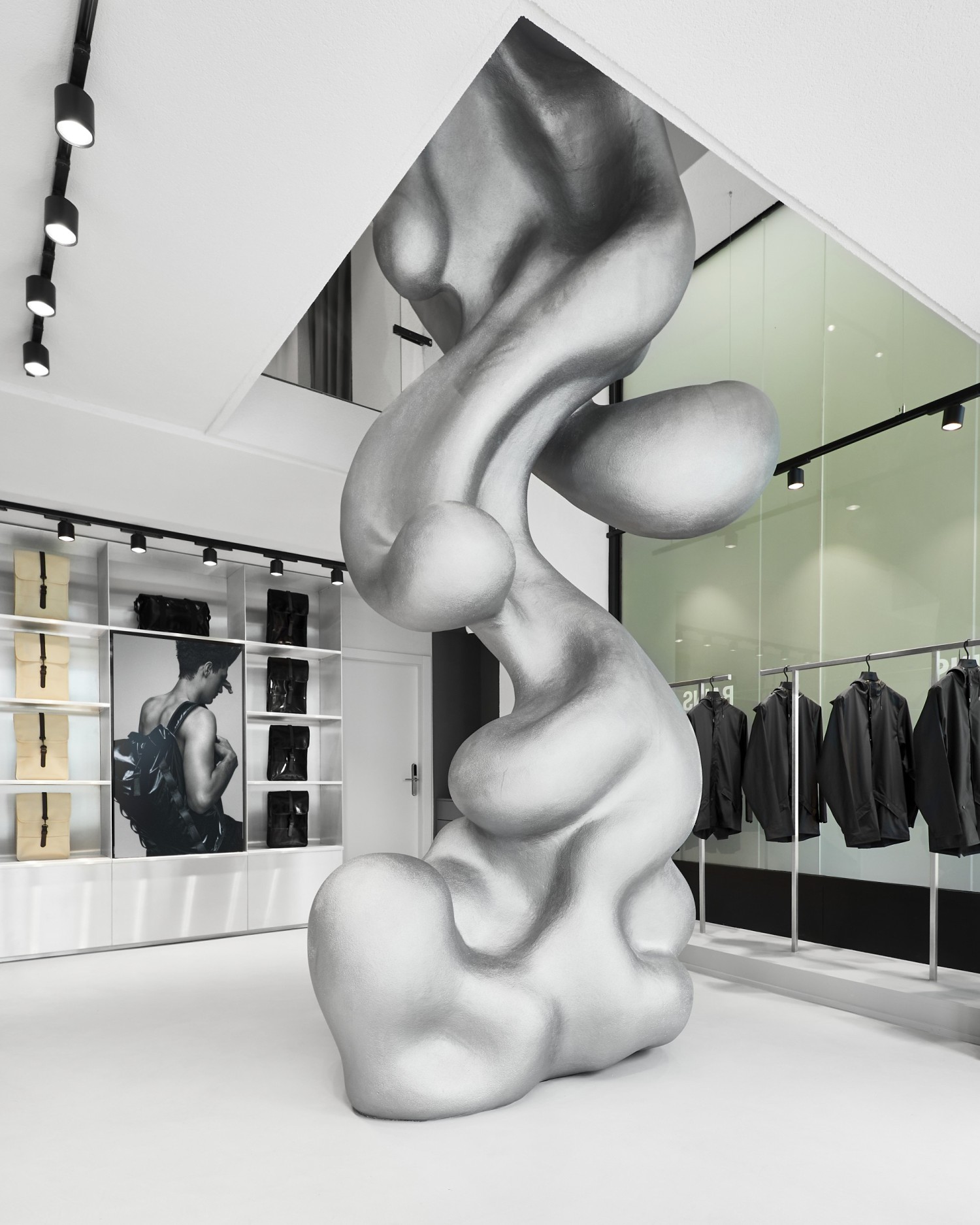
Molten Mirror, Jacob Egeberg © Jacob Egeberg
He has established himself as one of the rising stars of the Scandinavian design scene, creating an immersive universe of organic and complex forms.
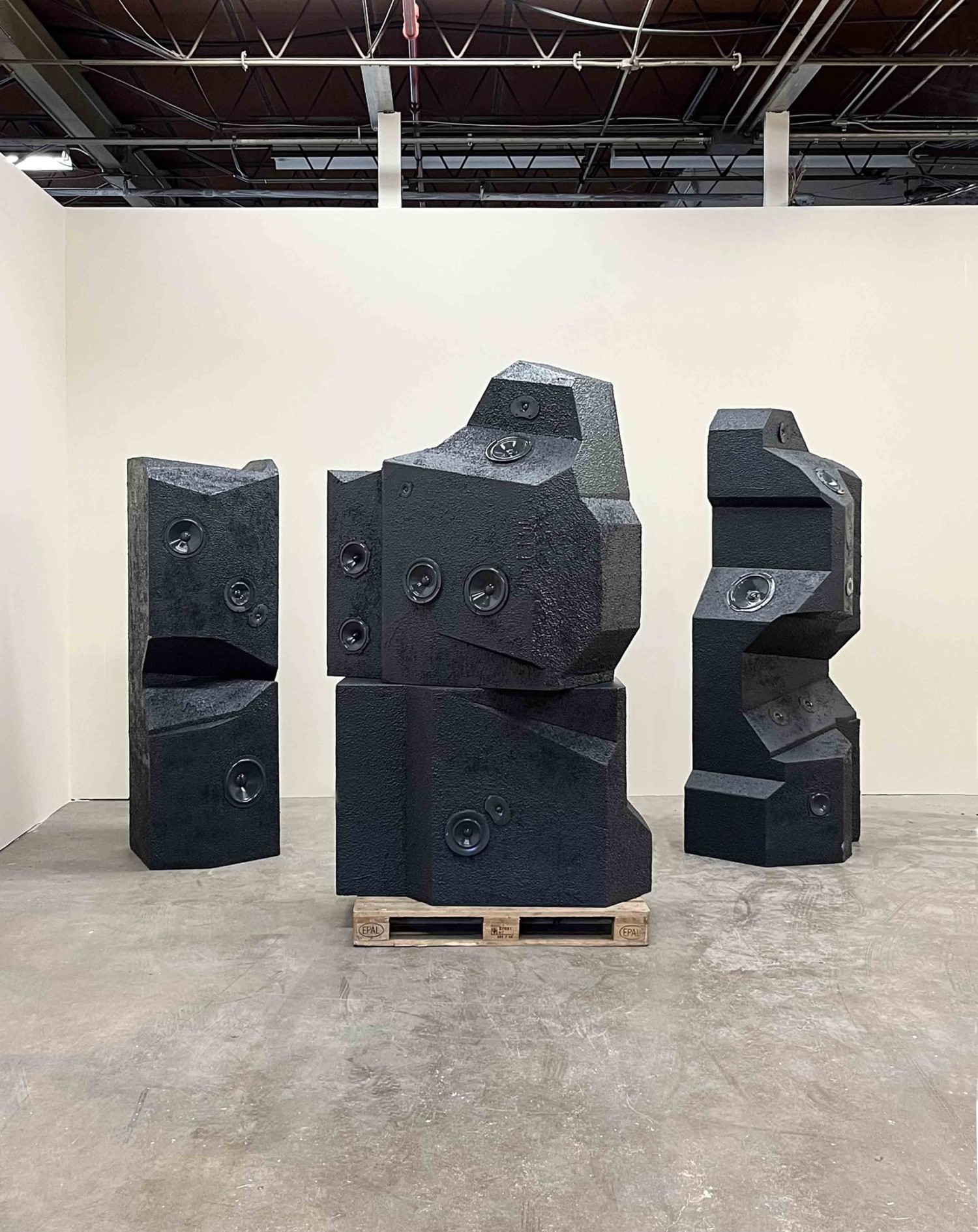
With an ability to move from one scale to another depending on the project, Jacob Egeberg enjoys covering both functional objects — which fit in the palm of your hand, such as the Bolt Cup — and monumental textured installations that border on set design. He leaves his unique mark by imagining a parallel world using industrial materials, from powder-coated steel to moulded plastic, worked in a vibrant monochrome palette.
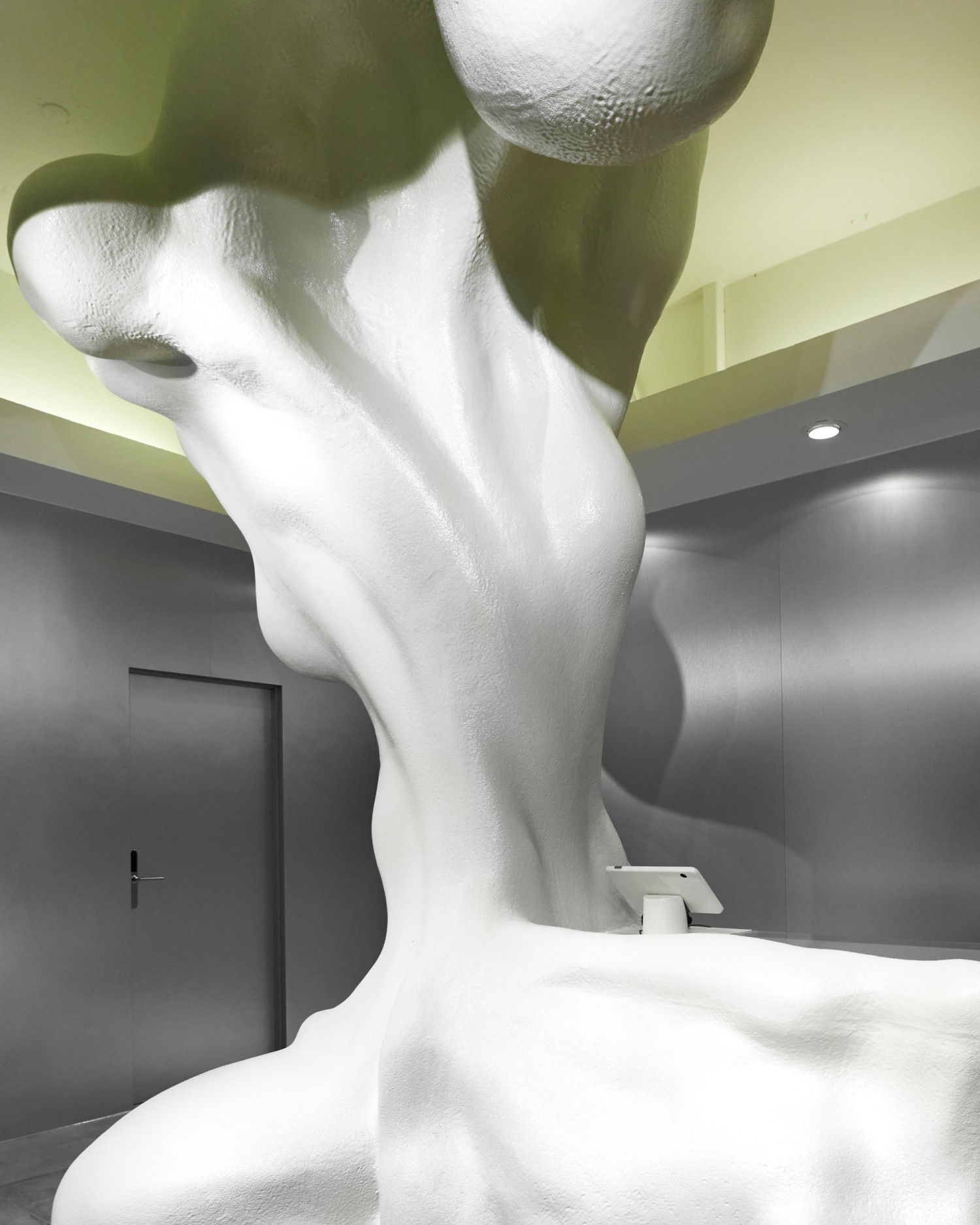
It is thanks to his unique style — which he describes in three words as contemporary, industrial, and playful — and his unconventional approach to interior design and retail that he has particularly attracted the attention of the Rains rainwear brand, for which he has designed a handful of flagship stores, from Madison Avenue in New York to Rue Saint-Sulpice in Paris.
BETWEEN TWO DIMENSIONS
The designer explores nostalgic themes, contrasting the very natural with the very artificial: the raw aspect of nature and geological forms feed his imagination, notably with the presence of cosmic, mutant elements. The two-storey piece he designed for the Milan boutique is a testament to this. Indeed, Jacob’s works — the largest of which fully occupy the space — are his signature. He turns the space he is given into an exhibition space — a dimension he considers important in today’s virtual world where online shopping reigns supreme. For the creative artist, it is a way of transporting visitors to another world.
His work serves the architecture and logic of the space it occupies. As he explains for one of his latest projects — notably the Rains flagship store in Paris, nestled in the 6th arrondissement — he thinks and personalises in terms of space. The result is a tailor-made piece in harmony with the other elements present. The installation, as if in motion, positioned at the entrance to the store, plunges visitors into another dimension: an illusion reinforced by the architecture of the space, particularly its exposed stone walls.
One day Jacob thinks about these spaces and the next he designs a series of furniture ranging from sofas to stools. His creations, small or large, bordering on works of art, are inspired by the urban landscape and the industrial era, but are also, above all, a reflection of our times. Attracted by constant transition and guided by the desire to explore new mediums, he finds his balance.
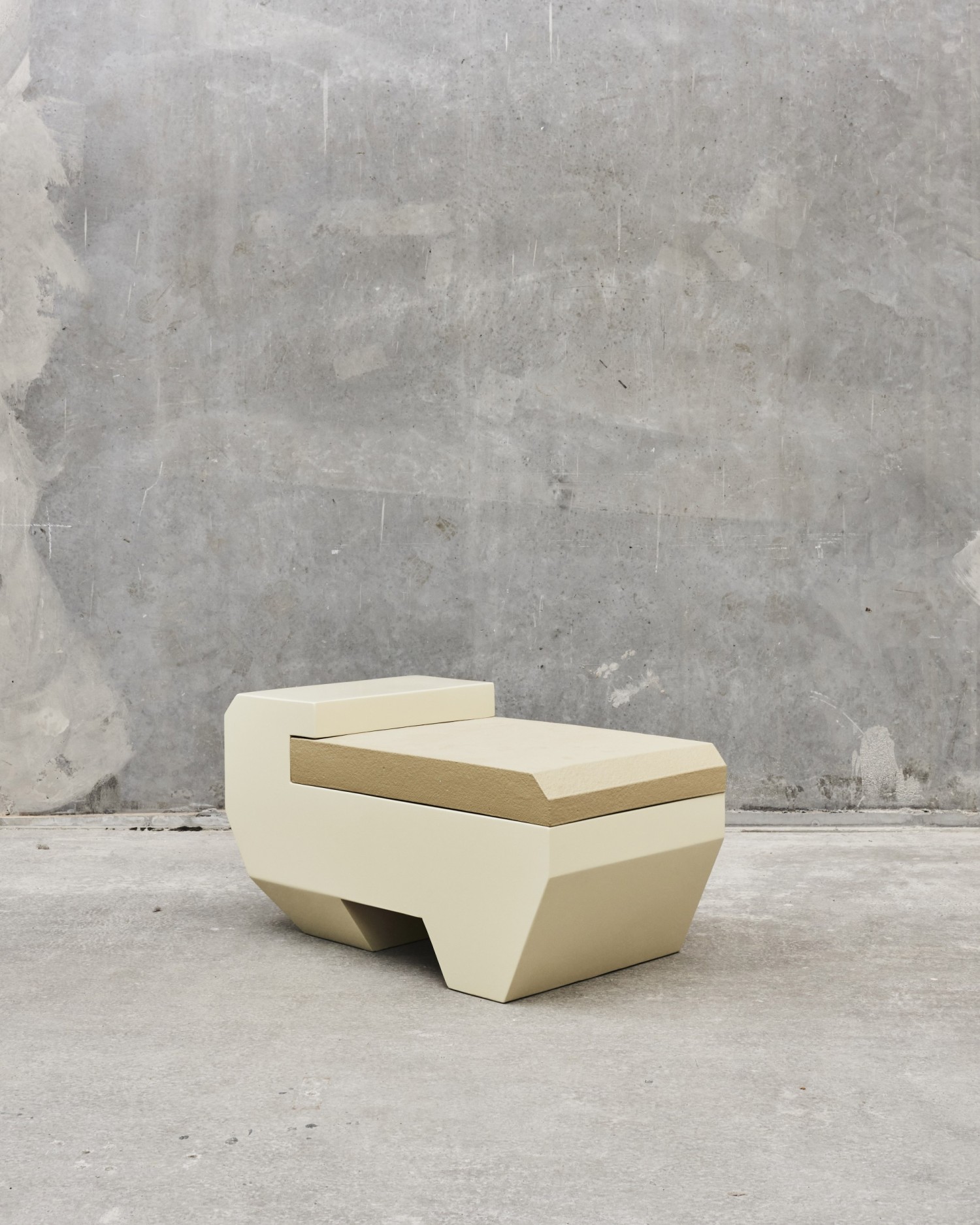
One of his successful collections, the all-terrain lounge edition, Amphibious Seatings, is inspired by architecture and brutalist references. Here, he challenges the material, creating an attractive trompe-l’oeil effect. Crafted using industrial methods, the pieces appear heavy and rigid but are light and soft to the touch. It is through these bold graphic lines that he continues to explore the unique contrast between textures and the juxtaposition of materials, where polished surfaces meet raw surfaces.
3 QUESTIONS TO JACOB EGEBERG
What attracted you to designing flagship stores?
I would say the freedom they offer. You can experiment and play with the space. Compared to more conventional venues, they are playful places that you visit, walk through, and leave, almost like a gallery. Visitors enjoy a unique experience before returning to reality. Today, with online shopping, these experiences are even more valuable in my opinion: I make sure that the space I design has an impact and surprises people.
How do you choose and work with your medium?
When I work with a material, I always start by understanding its properties and limitations — its weight, fragility, resistance. I change quite a bit; I like to switch from one material to another to discover new possibilities, to surprise with the feel or appearance, such as the weight — it keeps me from getting bored. A natural logic emerges: when I work with small formats, I use rather heavy materials and, conversely, when I’m dealing with large surfaces, I choose to explore and work with rather light materials for practical reasons. I also work with the element of surprise. With my creations, it’s rarely obvious what material is involved, which makes people wonder, want to touch, and interact with the piece. This is obviously something I keep in mind when choosing to work with a material.
How do you let the material guide your creation?
I am used to working with mediums that have the ability to change endlessly. But above all, I would say that by knowing the qualities and behaviours of each one, I can anticipate the results. I know where I want to go and how to get there, and with industrial materials, if you approach them correctly, you can easily achieve the result you want. •
photos : Sand puff © Jacob Egeberg • Speaker module © Jacob Egeberg • Rains, Jacob Egeberg, Aarhus, Danemark © Rains • Rains, Jacob Egeberg, Copenhagen, Danemark © Rains