Inspiration through material
Archives and Treasures, École Boulle, Paris, France © Nathan Robin
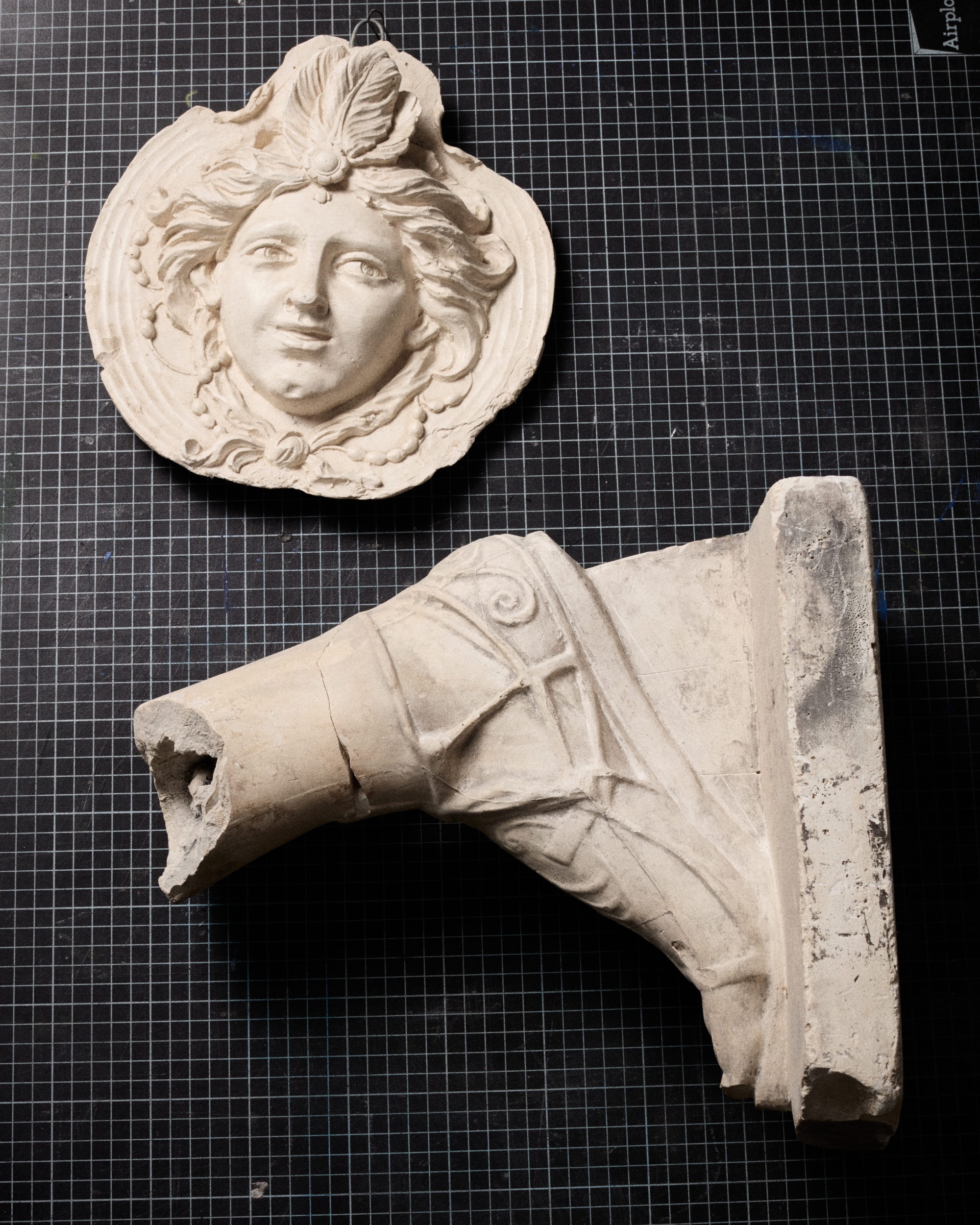
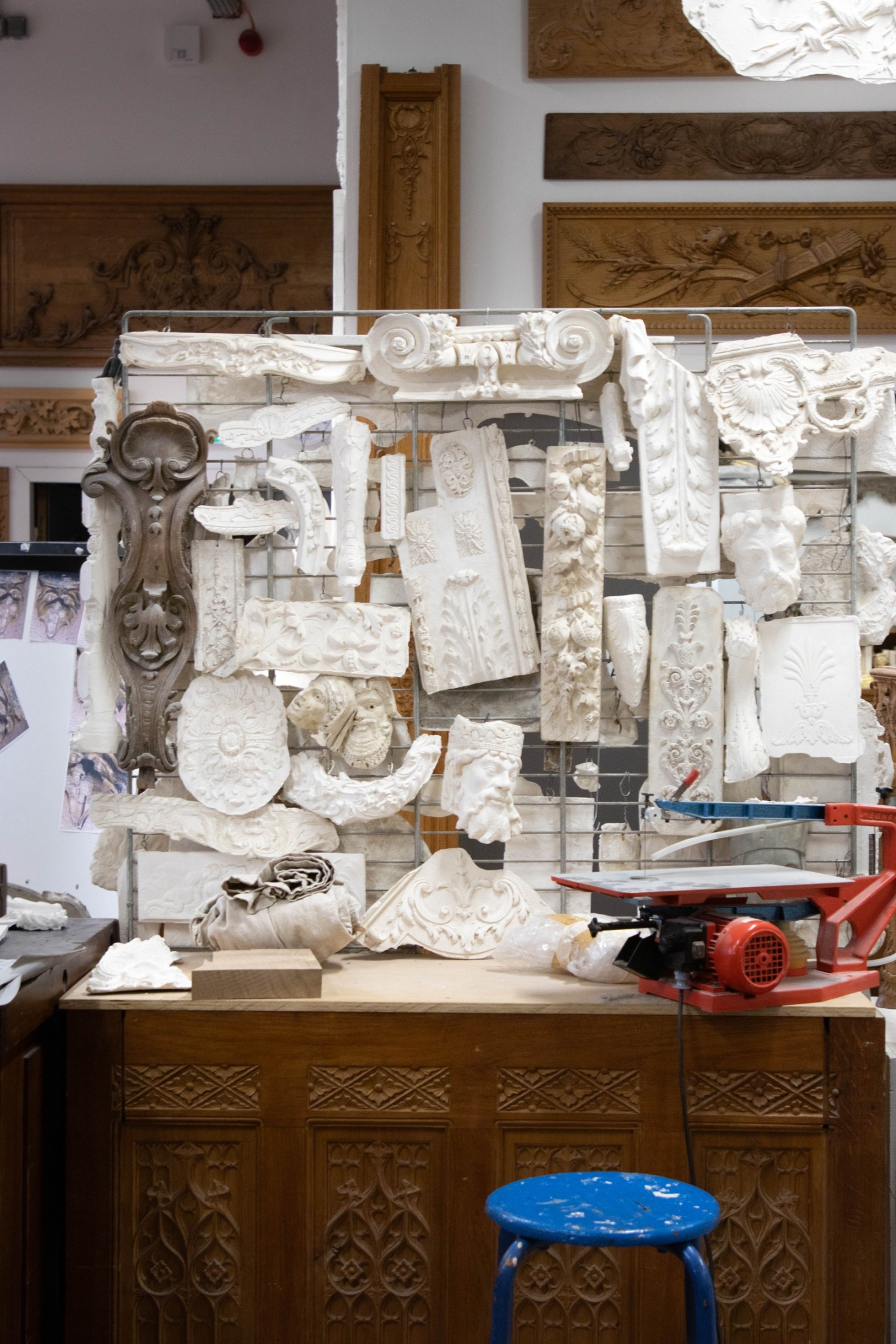
The École Boulle houses a plaster cast collection comprising more than 4,000 models, ranging from small figurines measuring just a few centimetres to monumental pieces several metres in size.
This collection, which covers a period stretching from ancient Egypt to the early 20th century, serves as a stylistic reference and formal vocabulary for students. Each plaster cast, whether Egyptian, Gothic, Renaissance or Art Nouveau, represents a stage in their progression. They form the basis of a long process of copying, which is essential for sharpening the eye and acquiring fundamental technical skills.
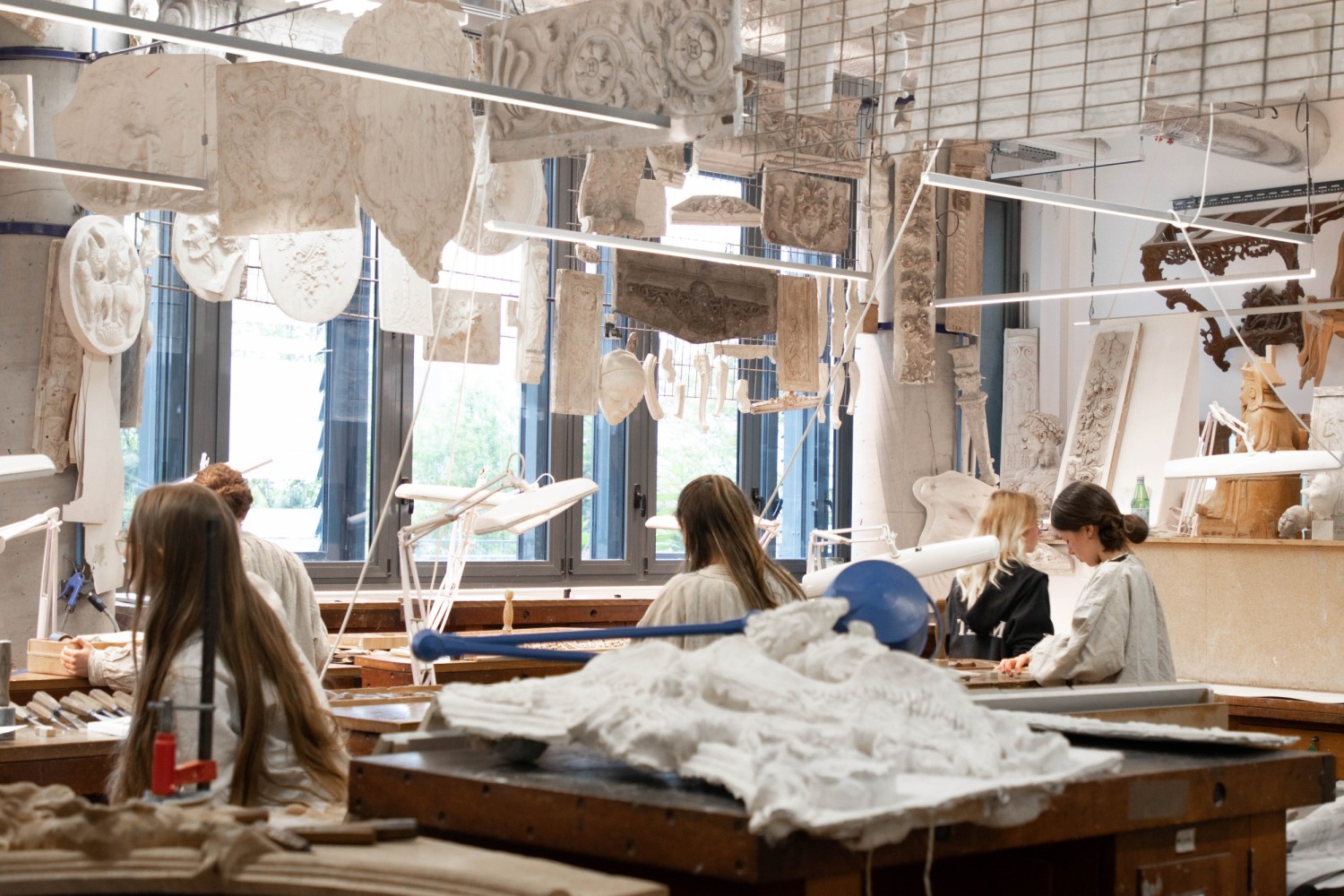
Indeed, sculpture teaching at the École Boulle is based on a methodical progression. Students begin by copying plaster casts, first in bas-relief, then in high relief, before moving on to sculpture in the round, i.e. statuary. This approach through copying, described as ‘solfège’ by the teachers, is a necessary step towards acquiring future freedom. The workshop is structured around two main areas: ornamentation, taught by Patrick Blanchard, and statuary, led by Yorane Lebovici, who teaches human and animal morphology. The aim is to sharpen the students’ eye and hand, while imparting a solid understanding of form.
A RANGE OF POSSIBILITIES
Once they have mastered copying, students develop their own projects from the second year of their bachelor’s degree onwards. They can use clay to model volumes, including large ones. This flexible material allows for mistakes and corrections, making it an ideal tool for learning and research. However, as raw clay is fragile and difficult to preserve for large volumes, students learn moulding techniques to fix their creations. Plaster then becomes the material of choice. Students experiment with different techniques, from ‘lost core’ — a plaster mould used for a single cast — to piece moulds, complex assemblies reminiscent of a three-dimensional jigsaw puzzle. For the most delicate shapes or multiple editions, they use silicone moulds, allowing for plaster or resin casts for very large-scale works, where lightness is a necessity. For large-scale projects, such as the reproduction of a life-size écorché by Houdon, students also use polystyrene. This material offers a lightweight and modifiable alternative, ideal for preparatory studies before carving wood. Unlike wood, where mistakes are often irreparable, clay and polystyrene allow for retouching and starting over. This study phase is crucial to ensuring the success of the final works.
COMPLEMENTARY SKILLS
The sculpture workshop welcomes around forty students of all levels, from high school students training in the arts and crafts (FMA) to undergraduate students. This diversity encourages discussion and emulation. Each project, whether personal or educational, systematically goes through the stages of drawing, then modelling or carving, before reaching its final form. In addition, today’s workshop incorporates contemporary tools such as chainsaws for roughing out large volumes and digital control. These technologies do not replace traditional techniques but complement them, enabling projects to be carried out that could not be completed by hand alone.
Armed with this unique technical and stylistic toolbox, students are ready to perpetuate exceptional skills while inventing the forms of tomorrow. The plaster casts at the École Boulle are not just models; they are living testimony to a know-how that has been passed down from generation to generation. Donated, exchanged with other institutions or created by the teachers themselves, they continue to inspire and train the school’s students. Here, plaster is not just a material: it is both the memory and the future of sculpture. •
photos : Sculpture workshop, École Boulle, Paris, France © Emma Lutz