Inspiration through material
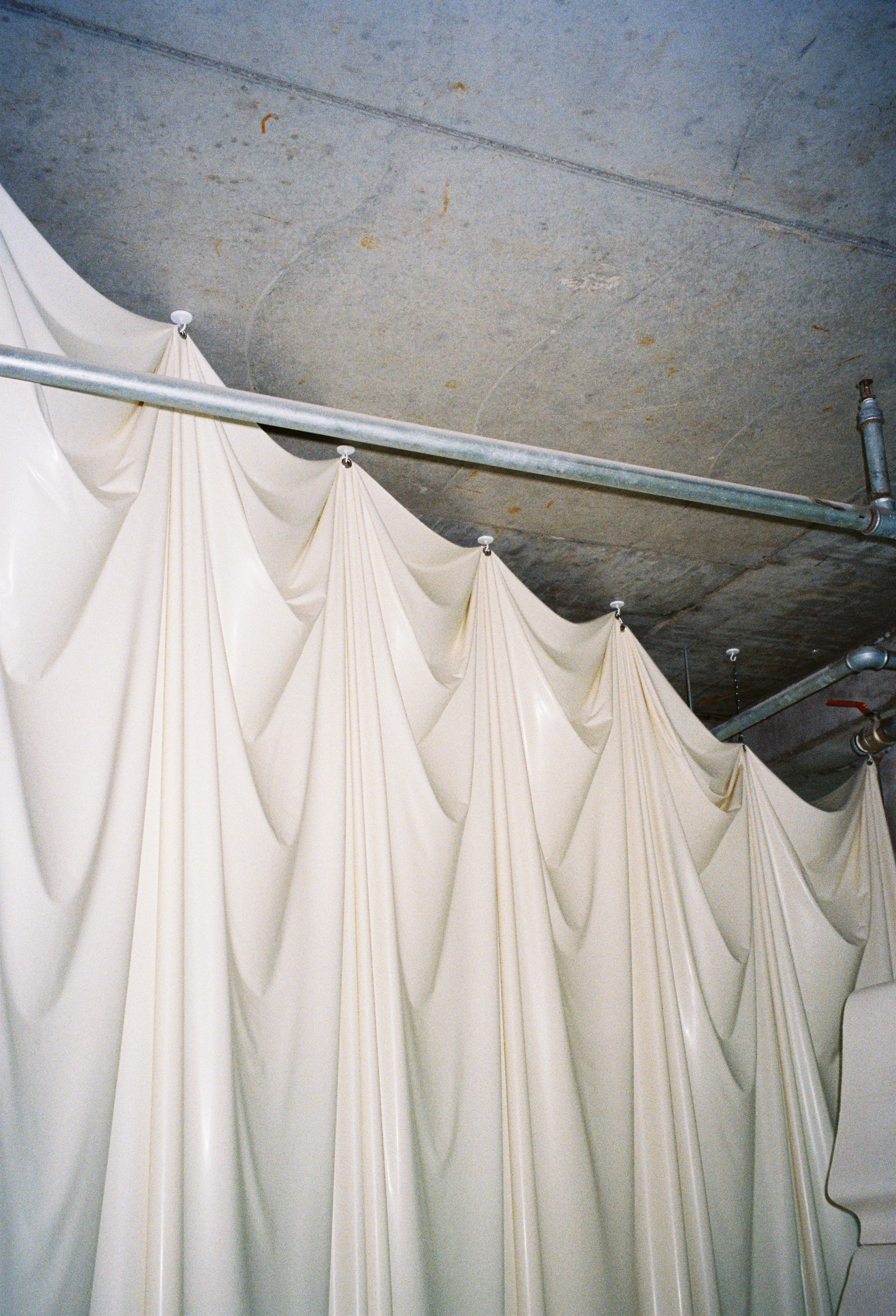
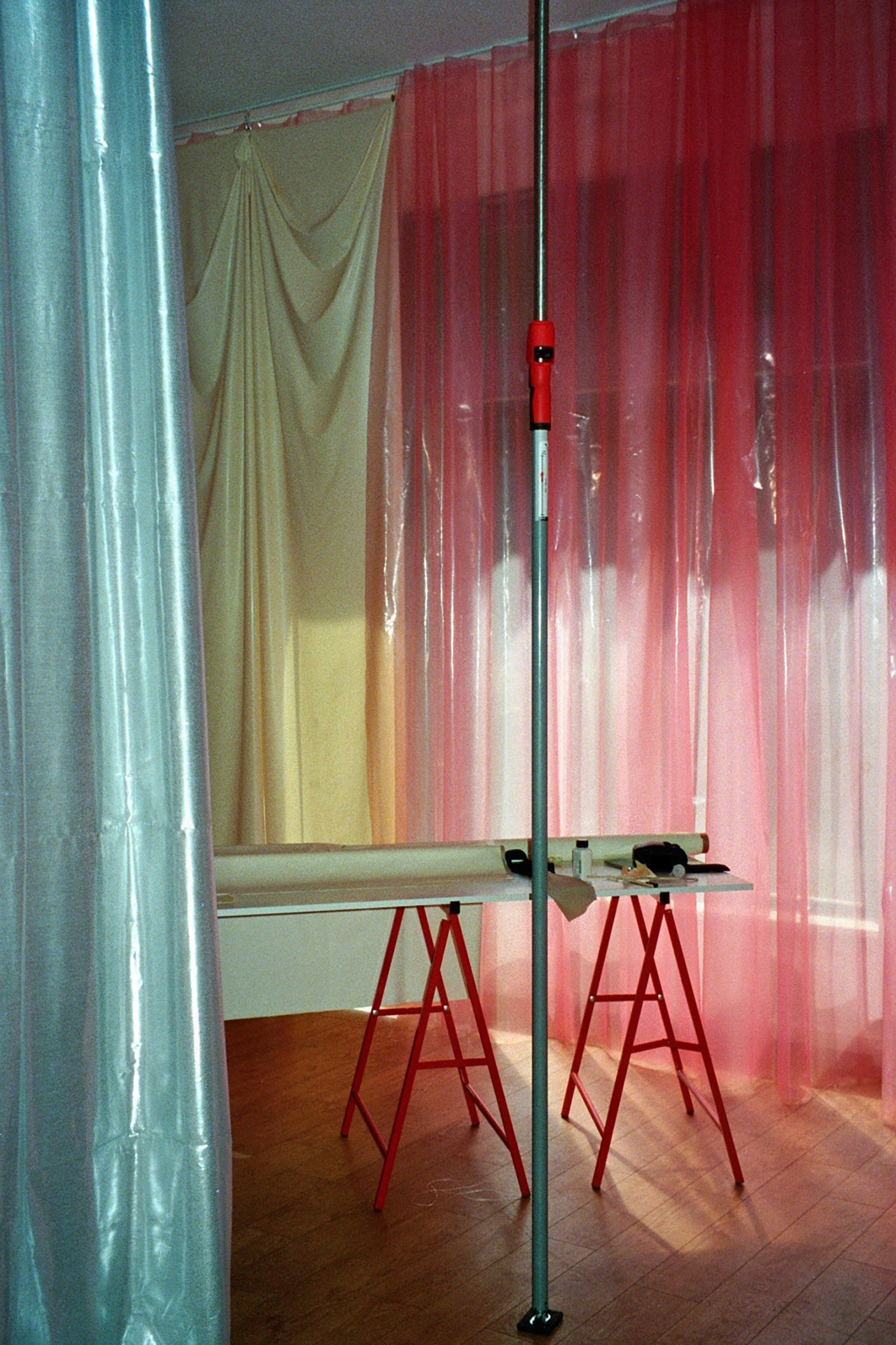
latex curtains for the Forma Gallery, Berlin, 2023 © Ksenia Oganesyan
Curtains are no longer just for insulating or dressing windows. They have become architectural elements in their own right: flexible walls, spatial dividers, light filters. And sometimes, they are transformed into works of art. This is an exciting field of experimentation for creative minds such as Ksenia Oganesyan, founder of the Cure.tain studio, who explores the versatility of curtains through unexpected materials and shapes.
Although she developed a passion for textiles at a very young age, Ksenia Oganesyan turned to architecture, training in Moscow and then in Dessau at the prestigious Bauhaus school. She then moved to Berlin and began her career in an architecture firm. But sewing remained in the back of her mind. A professional coincidence brought her back to her passion when she offered to make the curtains for a project herself. She rediscovered sewing, but above all the infinite potential of the curtain, a medium between textile and space, between material and use.
The young woman then began to experiment. She met textile artists in Brussels and Tbilisi, worked on the reaction of materials in space, and observed their relationship with the body and light. ‘By sourcing materials from places other than interior textile manufacturers, I discovered new materials, from fashion or technical hiking equipment’, she explains. This physical connection with curtains in her work increased her interest in materials that go beyond the traditional.
In 2021, she founded Cure.tain, a studio whose name — a combination of curtain and cure — evokes both curtains and a form of personal healing. In this space, she can finally conduct her research freely.
Starting with simple sheer curtains, she gradually leads her clients towards experimentation. This was the case for the premises of the e-bike company Dance. It was her former teacher, architect Sam Chermayeff, who was in charge of the project, who invited her to design the curtains. His anti-design approach, which had a profound impact on her, took shape here. The curtain becomes a spatial tool with classic uses — flexible partitions, acoustic improvements — but also more atypical ones. ‘Sam wanted to cover the toilets with curtains to create a soundproof telephone booth’, she says with a smile. It was a surprising idea, but above all a functional and technical challenge. ‘We had to take into account the architectural elements of the space. We had to integrate openings for the mirror and sink, while choosing a rigid, waterproof material that was suitable for the function’, explains the artist. Here, the curtain reveals its full versatility and propels Ksenia Oganesyan into a still largely unexplored artistic territory.
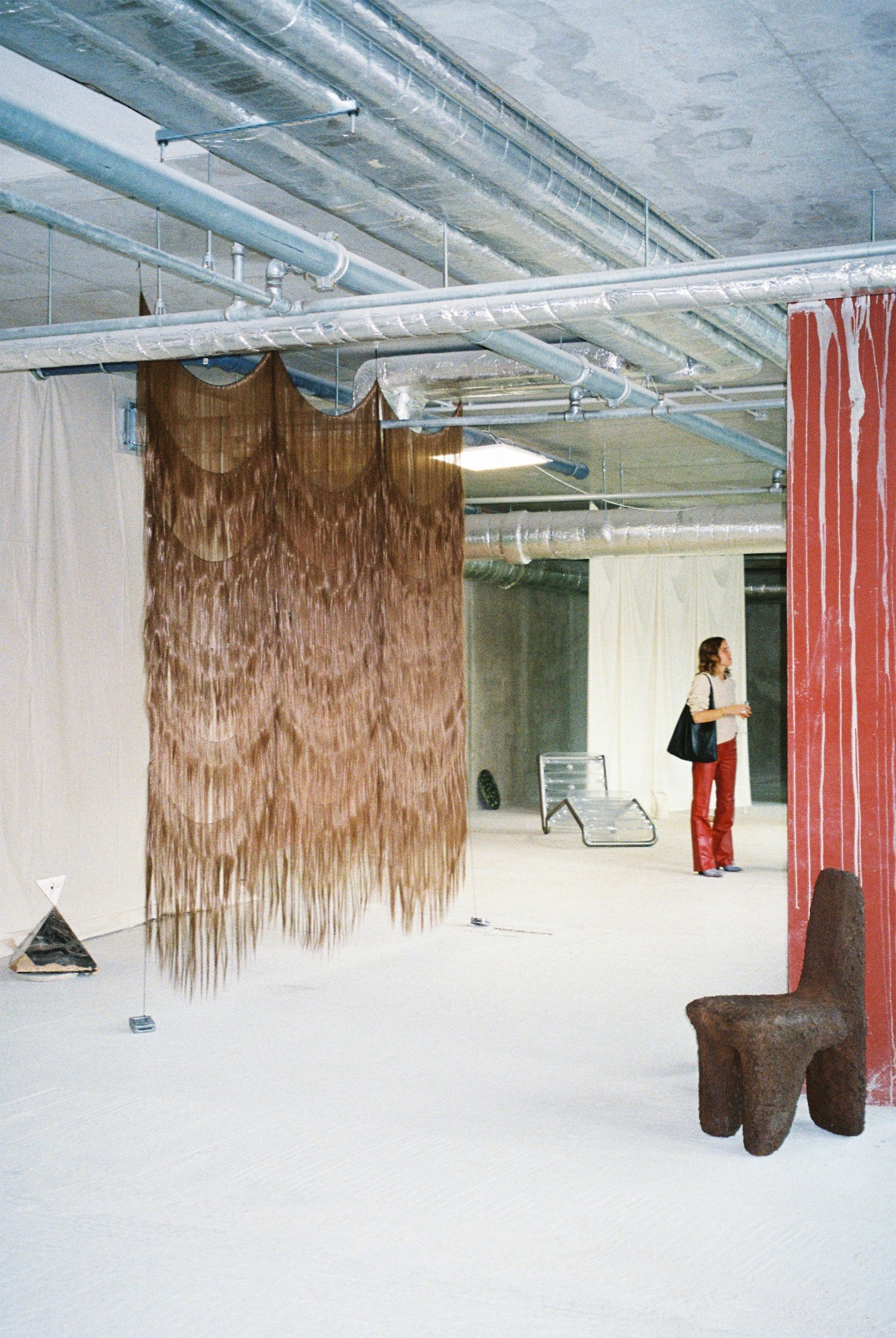
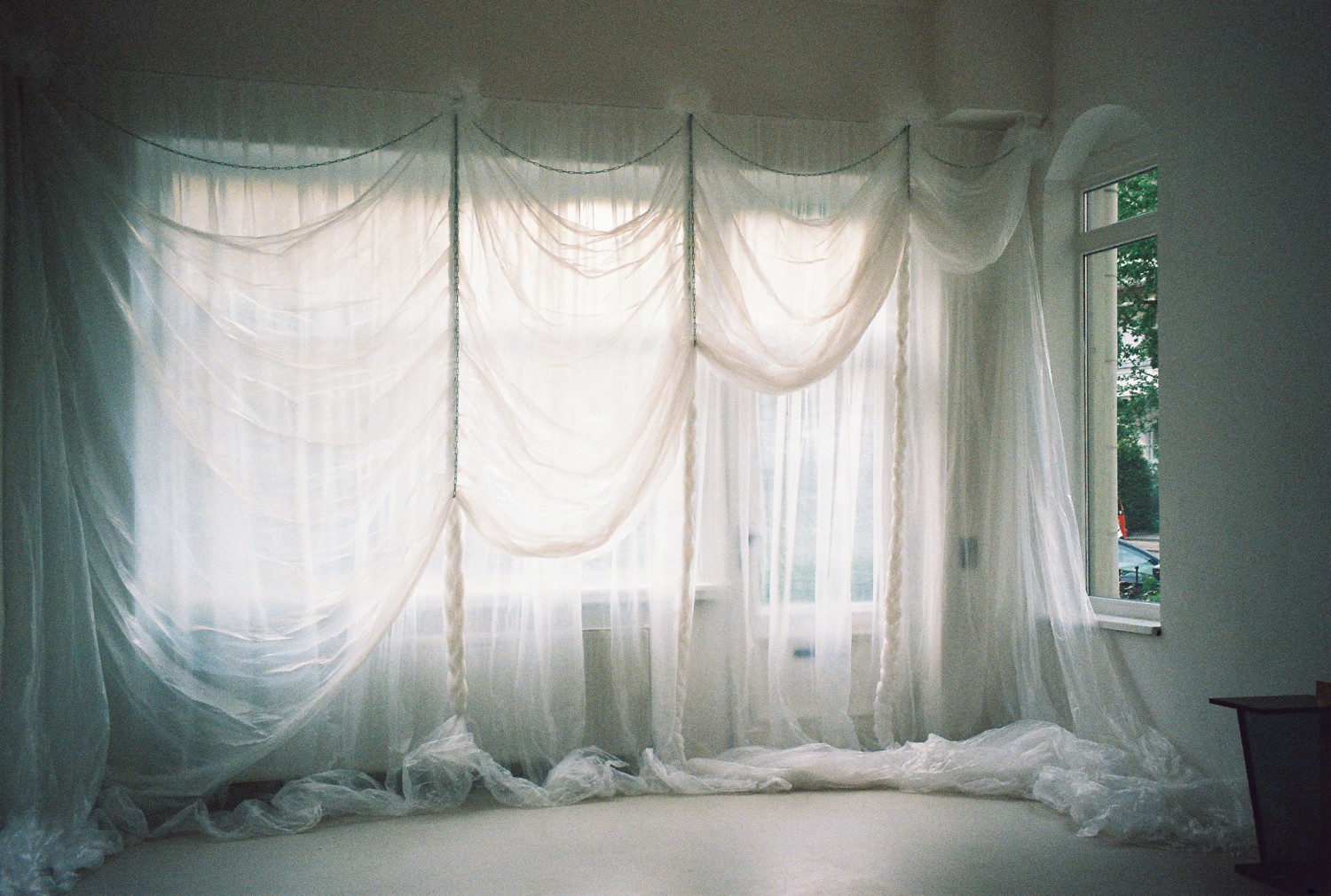
‘During the exhibition “The room I walk the line” for the Forma gallery in Berlin, I discovered that curtains could become an artistic expression in their own right’, she says. To organise the space according to the colours and textures of the design objects on display, she imagines curtains made from surprising materials. One in white latex, the other in artificial hair strands, the pieces then become works of art in their own right within the exhibition. The curtain moves beyond its role of insulation and privacy to explore new materials and forms.
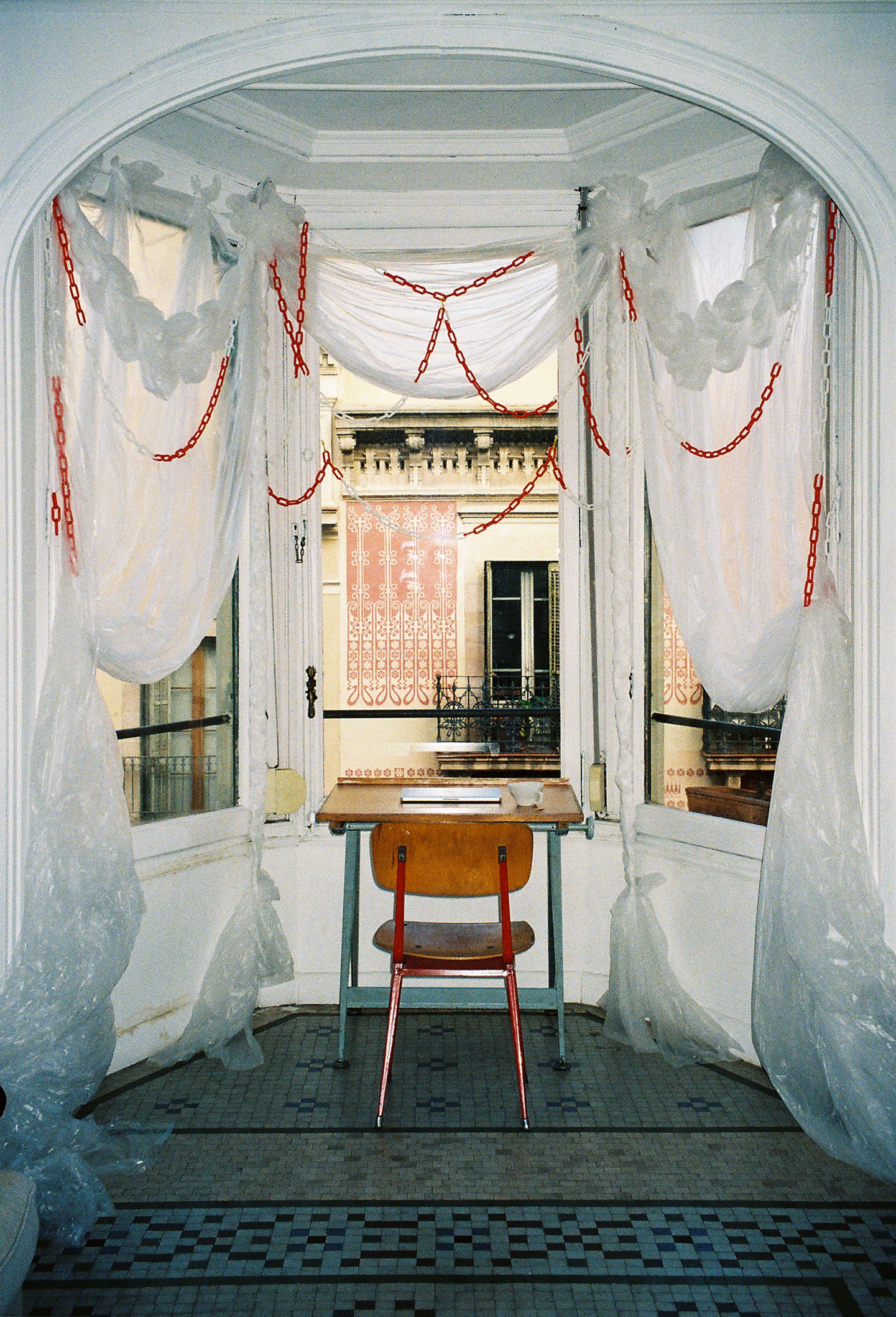
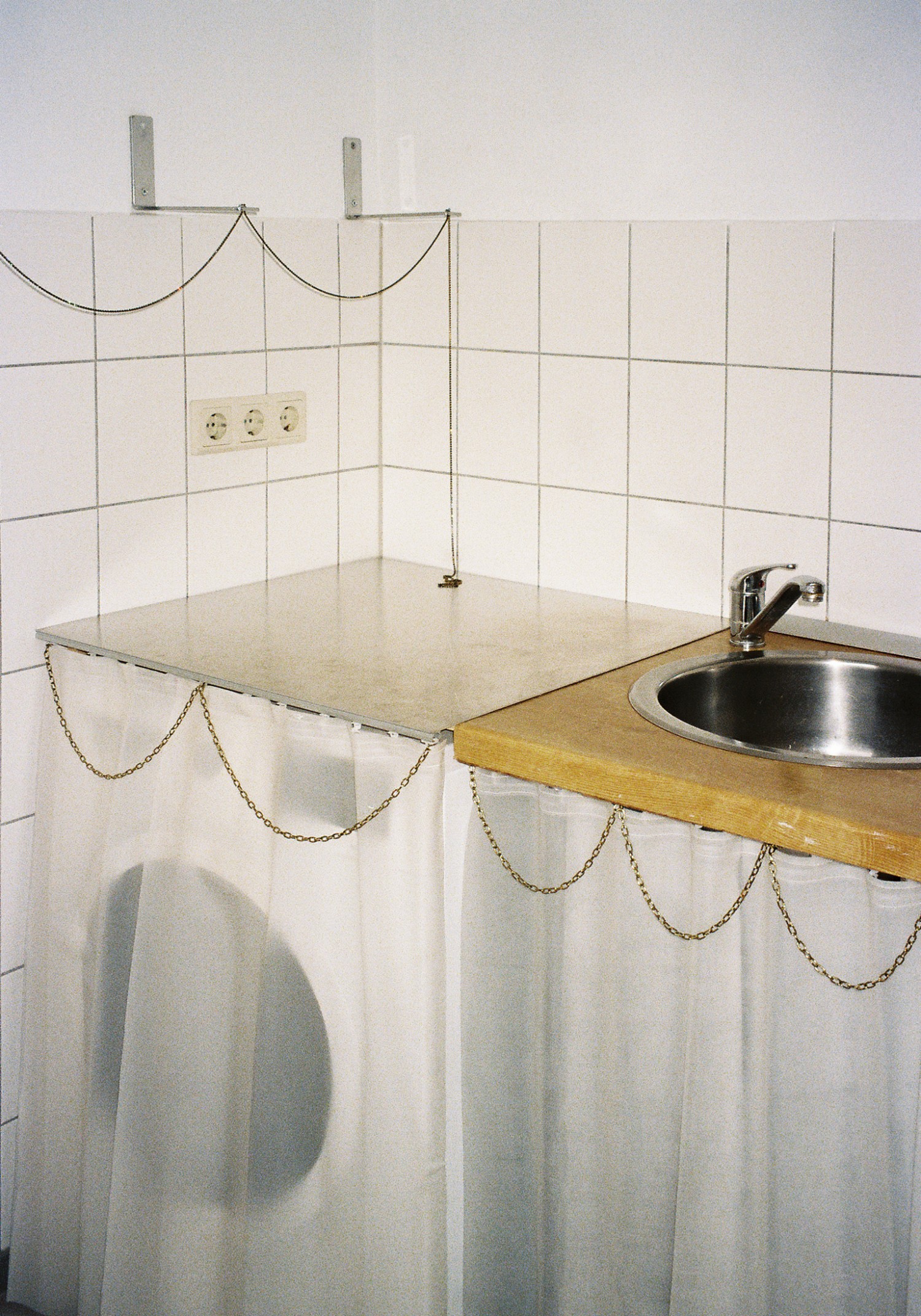
From interior design to artwork, Ksenia Oganesyan develops ‘coherent transitions’. One feeds into the other. They respond to each other, transpose each other and enrich each other for new uses. Recently, she has taken an interest in steel chains for the exhibition “Work in Balance”, conceived by Billy Jacobs. Used in the construction industry as a barrier, the chain becomes a metaphor for our evolving emotions, interactions and limitations. This artistic research has naturally found a functional interpretation in her interior design projects. In her flat in Barcelona, a more delicate chain is combined with a slightly opaque film to create a curtain that diffuses light and protects from prying eyes.
Her thinking shows a clear continuity and paves the way for new applications. ‘I would like to create a series of curtains in the near future, in the same way that painters create variations of the same work according to the seasons’, she concludes. A set of prefabricated pieces that are affordable and adaptable, yet unique in their colours and dimensions. This new experiment promises to be surprising. •
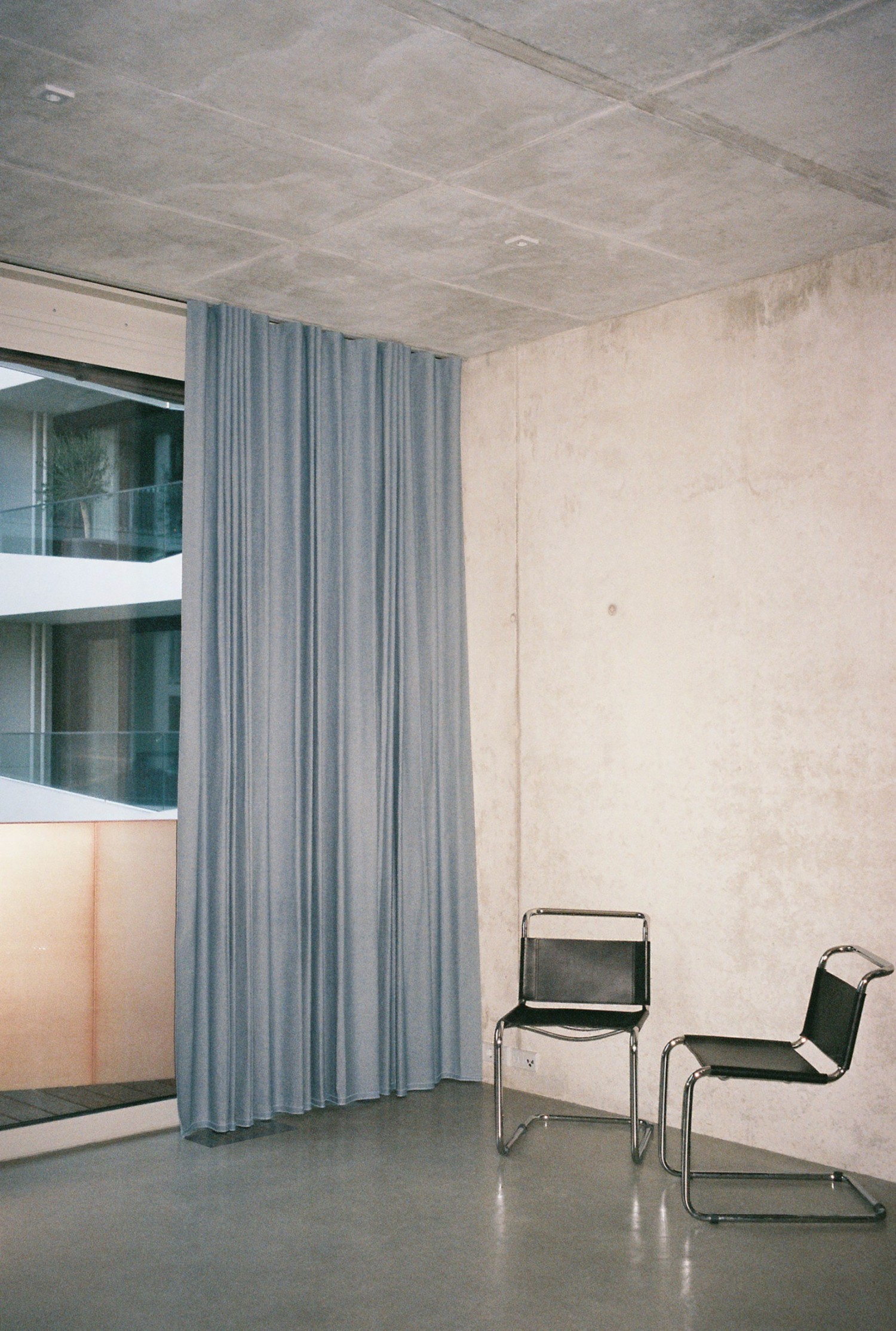
Artificial hair curtain, Forma Gallery, Berlin, 2023 • Curtains made of construction film and plastic chains, Barcelona, 2025 • Denim curtains, Berlin, 2024 • Curtains made of construction film, steel chains, “Construction-site-specific” exhibition, Vaust Gallery, Berlin, 2025 • Latex curtains, Cure.tain workshop, Kreuzberg, Berlin, 2023 • Ksenia Oganesyan’s flat, film curtains and chains, Barcelona © Ksenia Oganesya