Inspiration through material
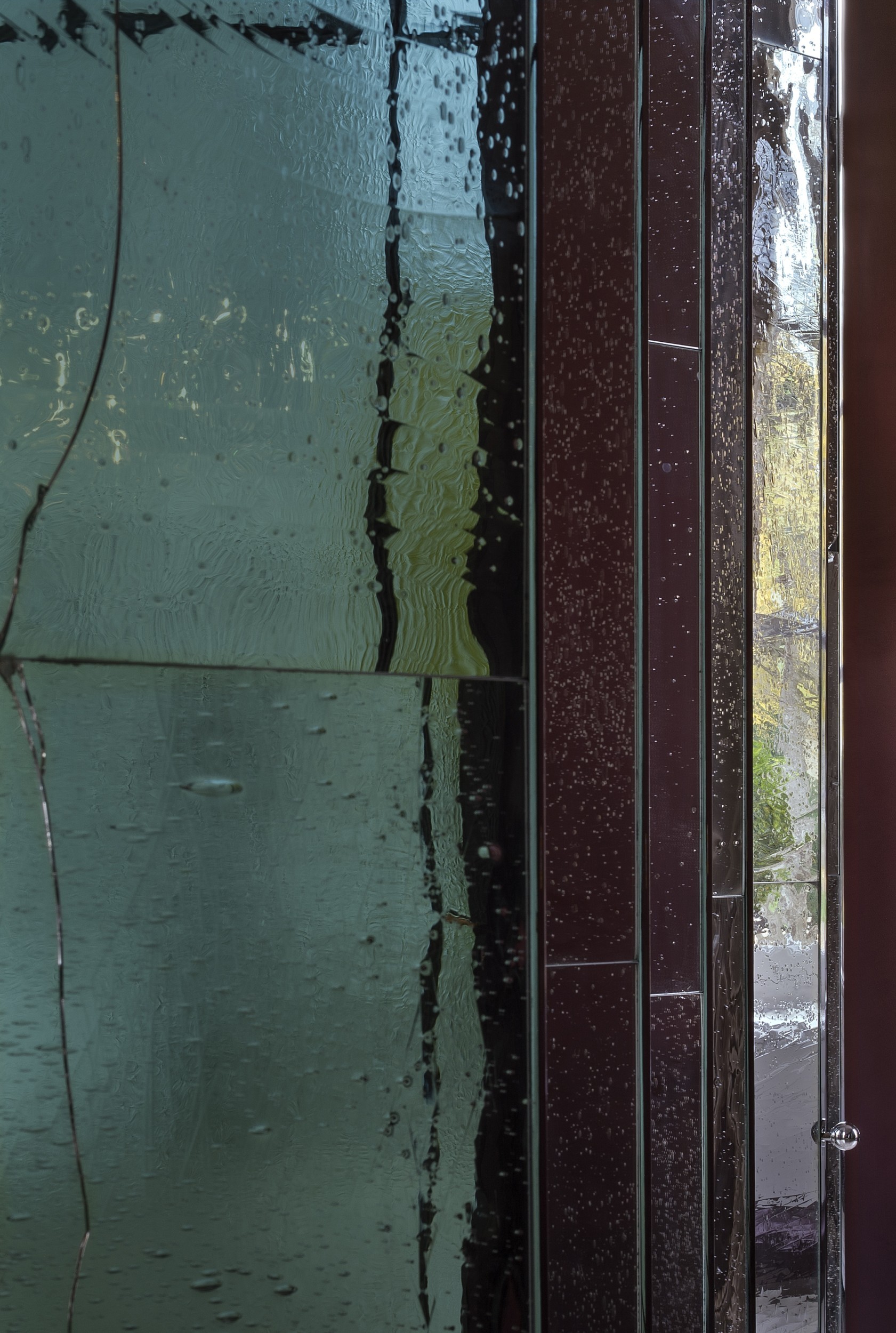
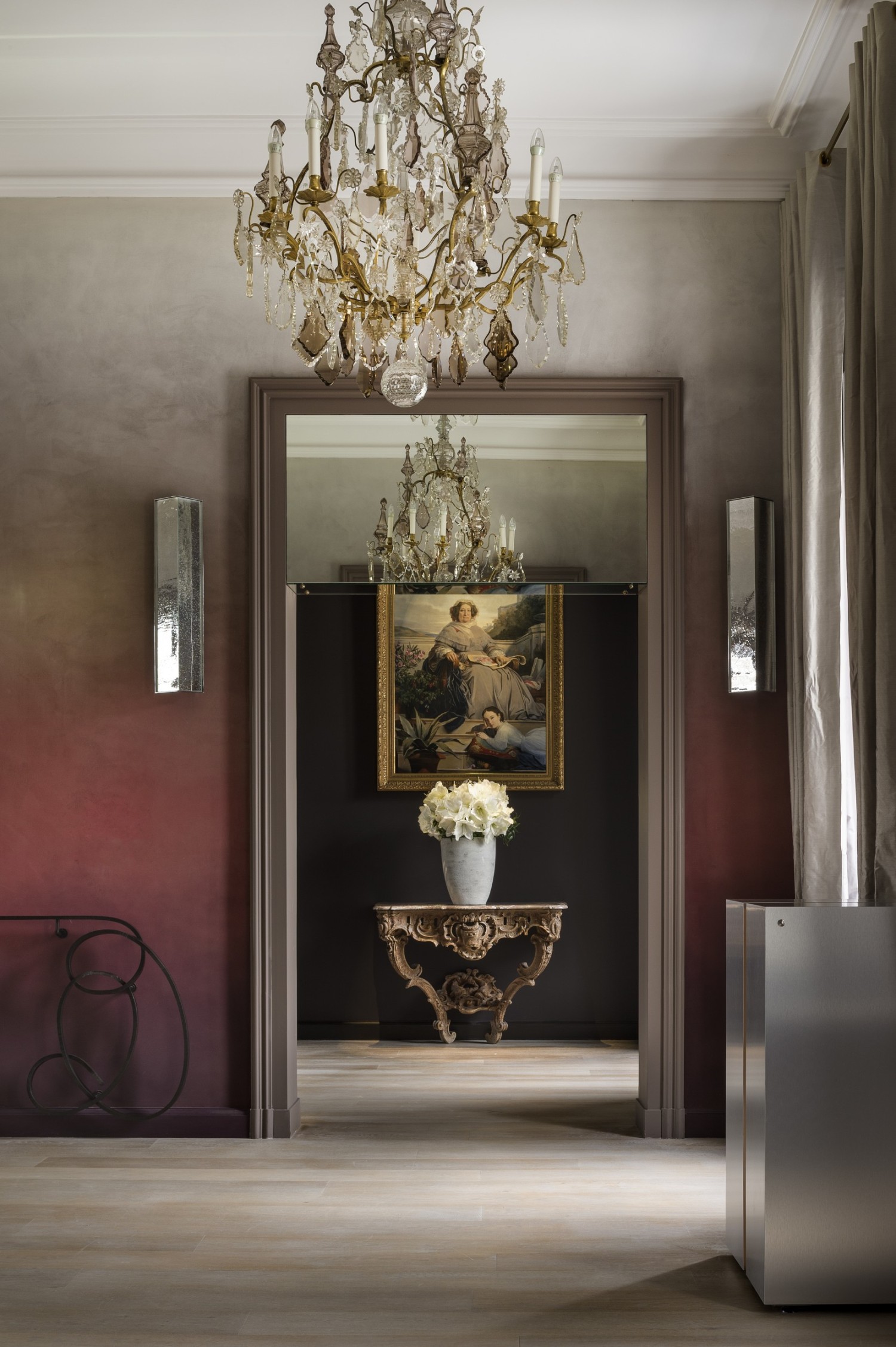
Hôtel du Marc, Veuve Clicquot, Reims, France, 2011 • © Jacques Pépion
In the world of wine, Moinard Bétaille has developed a unique approach: integrating contemporary elements into historical continuity to transform technical and working spaces into places of experience, hospitality and transmission. Wine cellars, estates, mansions and monumental cellars are never just infrastructure. They are places of life, reception and representation, where the technical aspects of wine interact with an art of hospitality deeply rooted in wine culture.
The challenge is to capture the identity of the terroir, the memory of the place and the vision of its owners in order to design the right architecture, capable of accompanying the maturation of the wine as well as the human experience. The agency’s intervention seeks neither spectacular effect nor rupture, but something obvious: to reveal what already exists by giving it a contemporary form.
BETWEEN PURITY AND EXPERIENCE
The agency’s wine-growing adventure began in the mid-2000s with the renovation of the Château Latour cellars in Pauillac, shortly after its acquisition by François Pinault. This first opus established a framework based on sobriety, horizontality and anchoring in the landscape. The architecture accompanies the long ageing process of the wine: underground cellars, sober materials, taut lines. Nothing stands out, everything is part of the eternity of a legendary vintage. The perfect square of the buildings has been preserved, but the interior has been completely redesigned. Everything changes so that the essential remains: the identity of Latour.
In Reims, with the Hôtel du Marc Veuve Clicquot, the question shifts. It is no longer a question of accompanying maturation, but of scenographising the spirit of a house. Entering the Hôtel du Marc is like entering the brand. The colour is concentrated like a Pinot Noir juice, the light makes the bubbly glasses sparkle, and the spaces alternate between opulence and intimacy. Here, the architecture becomes a narrative. It conveys the sparkle, audacity and energy of a house that has conquered the world. Where Latour works with restraint, Veuve Clicquot embraces embodiment.
JOURNEY, TERROIR AND HOSPITALITY
This dialectic between technical rigour and sensory experience is fully deployed at Château Troplong Mondot and Clos de Tart.
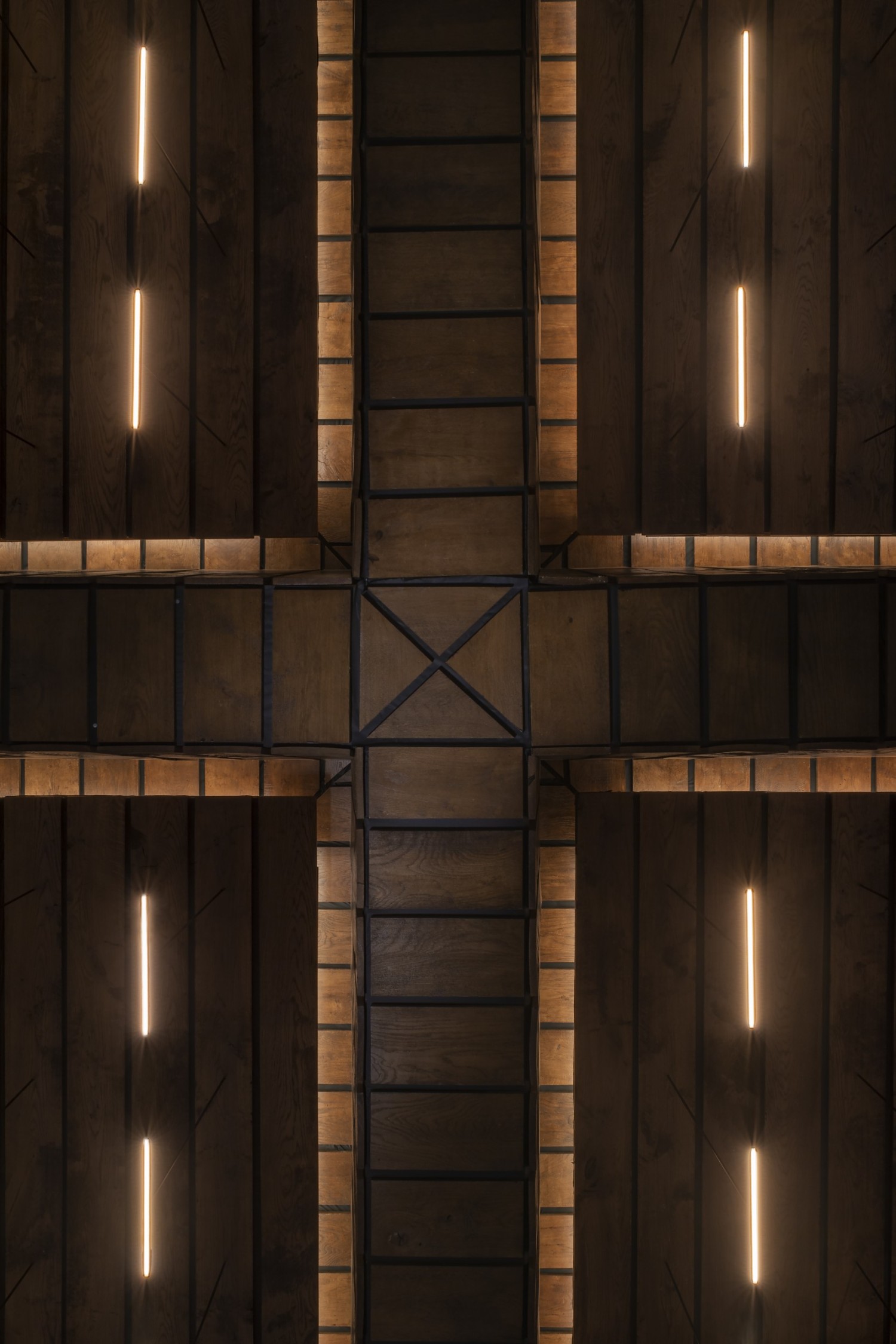
At Troplong Mondot, a Saint-Émilion grand cru, the octagonal geometry, the guiding principle of the project, places the vine leaf into the very architecture. The masterful cellar, dug more than ten metres deep, acts like an inverted cathedral. The textured concrete walls, inspired by traces left in chalk, give the place its mineral density. The vat room, softened by a laminated blond wood ceiling, creates a tension between warmth and rigour. The hospitality extends this high standard. The restaurant, lounges and terraces open the estate to the landscape and visitors, creating a natural continuity between production and reception. Wine is not just to be contemplated: it is to be shared.
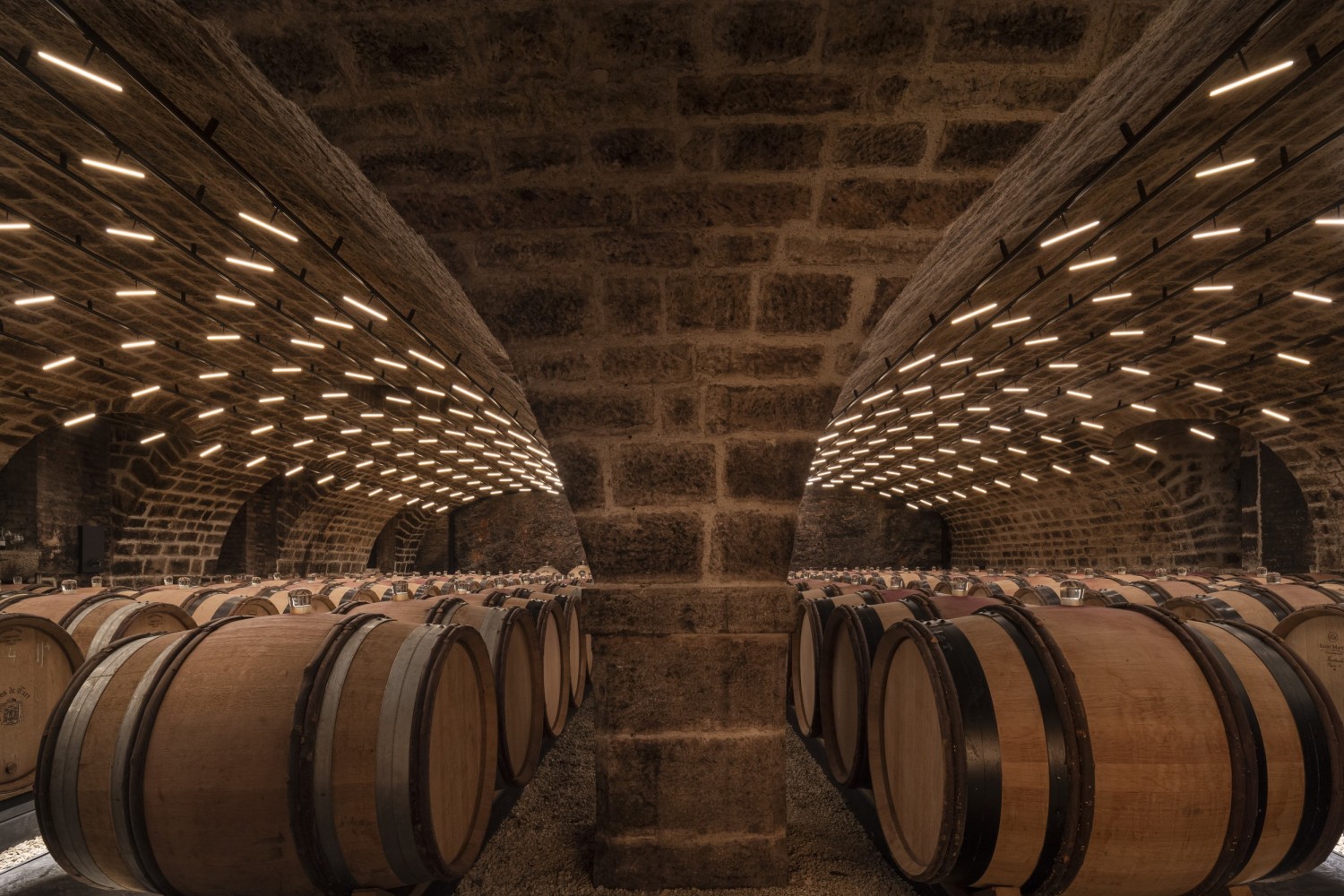
At Clos de Tart, the jewel of Burgundy, founded in 1141 by Cistercian nuns, history dictates a different approach. Here, the vineyard and its buildings form an almost immutable whole, preserved through the centuries. The intervention favours continuity and precision: conservation of the buildings, respect for proportions, materials in dialogue with the ancient stone. Contemporary features are discreetly integrated, guiding movement without altering the mystery of the place. More than a transformation, it is a silent rewriting, giving a future to a thousand-year-old memory. In both projects, the architecture organises a journey where technology, landscape and hospitality come together.
FROM CELLAR TO RITUAL
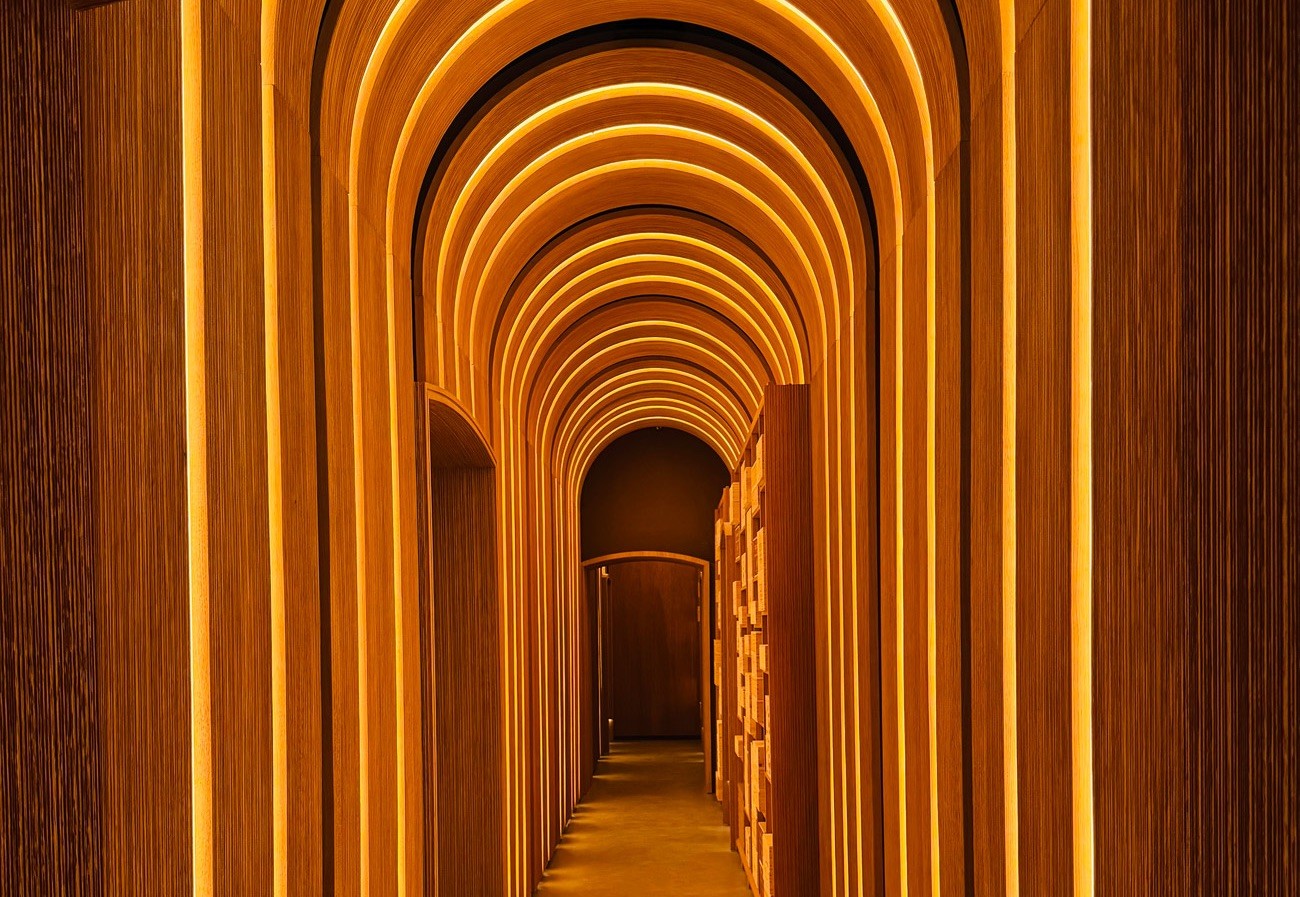
The recent transformation of the cellars at the Hôtel de Paris Monte-Carlo contin-ues this theme. The largest private cellar in Europe has become a showcase where conservation, discovery and tasting come together in a smooth journey. Clad in oak and structured like a succession of silent naves, it reconnects the monastic depth of wine with the life of the hotel and the experience of visitors. The central table, designed like an altar, emphasises the ritual dimension of tasting, while the pathways accompany the transition from shadow to wonder.
Through these achievements, Moinard Bétaille affirms a conviction: the architecture of wine should never dominate the vintage, but reveal its depth. Between technique and hospitality, memory and future, it composes places where wine is produced, shared and told — a living culture brought to life in space. •
Photos: Cellars of the Hôtel de Paris Monte-Carlo, Monaco, 2025 • © Moinard Bétaille • Hôtel du Marc, Veuve Clicquot, Reims, France, 2011 • © Jacques Pépion